

Students want to know what concrete steps the city is taking to improve safety downtown, how the city addresses the homeless population and ensures affordable housing for young people and recent graduates.
A recent poll of Burlington High School students showed these clear priorities for the student body. The top three concerns were about safety, homelessness and affordable housing.
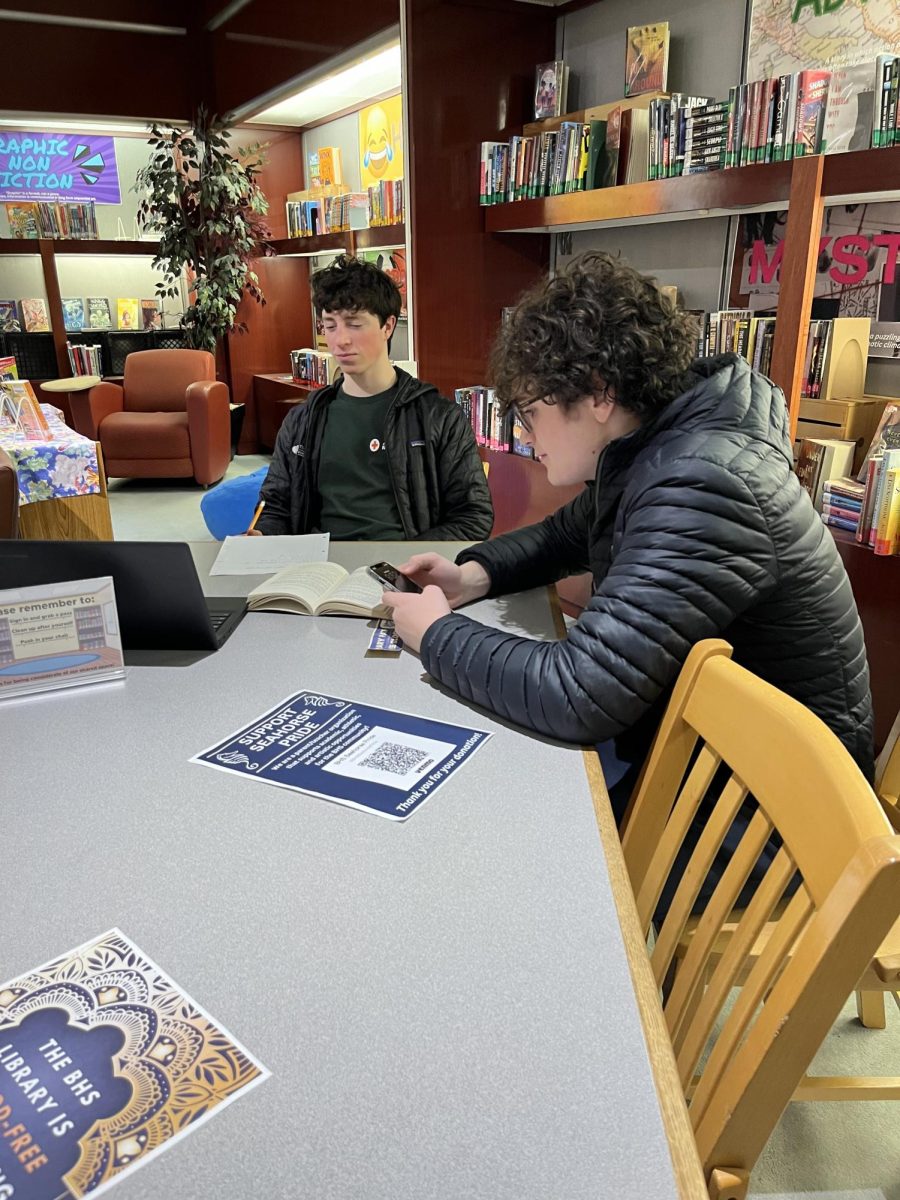
Oliver Angell ‘27 specifically said he feels strongly about “housing, keeping public spaces usable, crime and public perception of safety.”
Despite having some clear issues, Angell didn’t seem willing to bring them to a representative.
“It sounds like a lot of work, so no, but yes,” Angell said, “I emailed a senator once; I’m sure I could do it again. I could also email other, more local people, but that’s about it.”
Brian Sopchak ‘26, focused his concerns squarely on public health and homelessness.
“I feel like there’s a big homeless people problem,” Sopchak said. He specified that walking to school and “smoke blowing in your face or something that smells, like that’s not right. That shouldn’t be.”
However, like Angell, Sopchak expressed reluctance to take political action.
“Probably not, actually, like, I kind of expected that [legislators] would do that, but it hasn’t happened,” Sopchak said. A representative’s job as a legislator is to pass on the will of their constituents into law, but they can represent people better if the people come to them with what change they want to see.
One Citizen Can Shape Law
A single citizen holds a lot of power. Vermont House of Representatives member Bram Kleppner shared a short story about a piece of legislation he and other representatives are currently drafting, which was initiated by a single Vermonter. This constituent brought forward a legal concept called “curtilage,” which, as Rep. Kleppner put it, “means you have a reasonable expectation of privacy on the land around your home, not just in your home.”

The idea the Vermonter had was to expand this concept to include sensitive institutions. This would outlaw non-consensual filming in places such as schools and mental health counselling facilities. The constituent had been thinking about this because of a recent incident at the time in which someone was filming BHS students as they left school and posting it.
“[The proposed law is] a curtilage of privacy right that… will protect students and other people going in and out of sensitive institutions from being filmed without their consent,” Rep. Kleppner said. In this instance, a single, well-researched issue can reshape state law, regardless of who brings it forward.
How do Representatives get Their Information?
Rep. Kleppner relies on in-person community feedback.
“I would say the first way, before one is even elected, is going door-to-door during the campaign,” Kleppner said, “A lot of what you do is listen.”
Kleppner also relies on virtual communication to get information. Email and the Front Porch Forum are valuable communication forms that representatives and constituents utilize. Klepners says that when people email a representative about an issue, representatives share that information with one another. This grants representatives valuable information about the needs of districts across Vermont. This outreach allows representatives to find priorities that are shared across many Vermonters. So now that we know how a representative gets their information, what do they do with it?
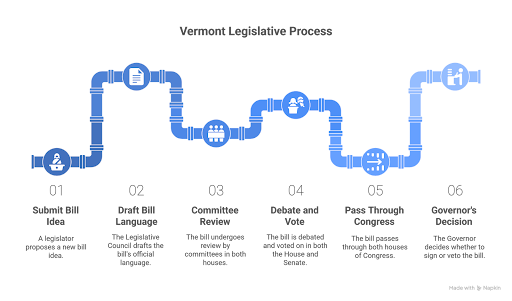
How Laws are Made
Vermont operates using a Citizen Legislature. In a Citizen Legislature, lawmakers are only truly considered lawmakers four days a week from January to the middle of May. After those four months of legislation are over, the lawmakers are done with their lawmaking duties on paper. Rep. Kleppner reveals, however, that being a representative is its own full-time job.
“All the problems we have are big and complicated and can’t be solved in four days a week for four months,” Kleppner said.
This is why, even when out of session, legislators are occupied by summer work groups, smaller groups working on policy and a lot of learning the issues of the public.
How you can shape law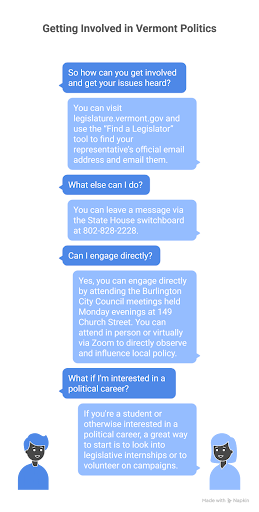
If one feels strongly about an issue, Rep. Kleppner advised to “contact your state rep,” He noted, “We represent [our constituents] year-round, whether we’re in session or not.”
Kleppner suggested contacting your representative in the House because they represent fewer people than Senators, so they can more easily give attention to individual voices.