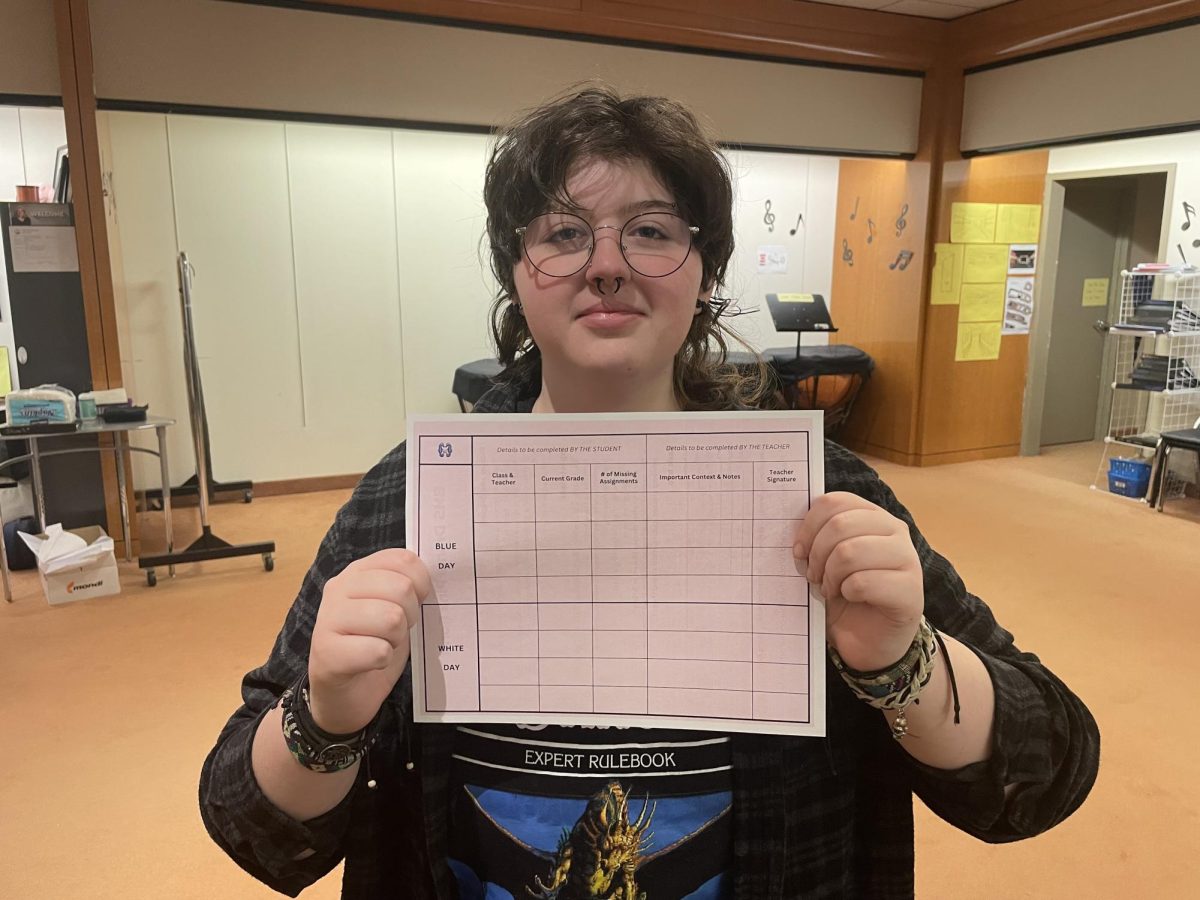


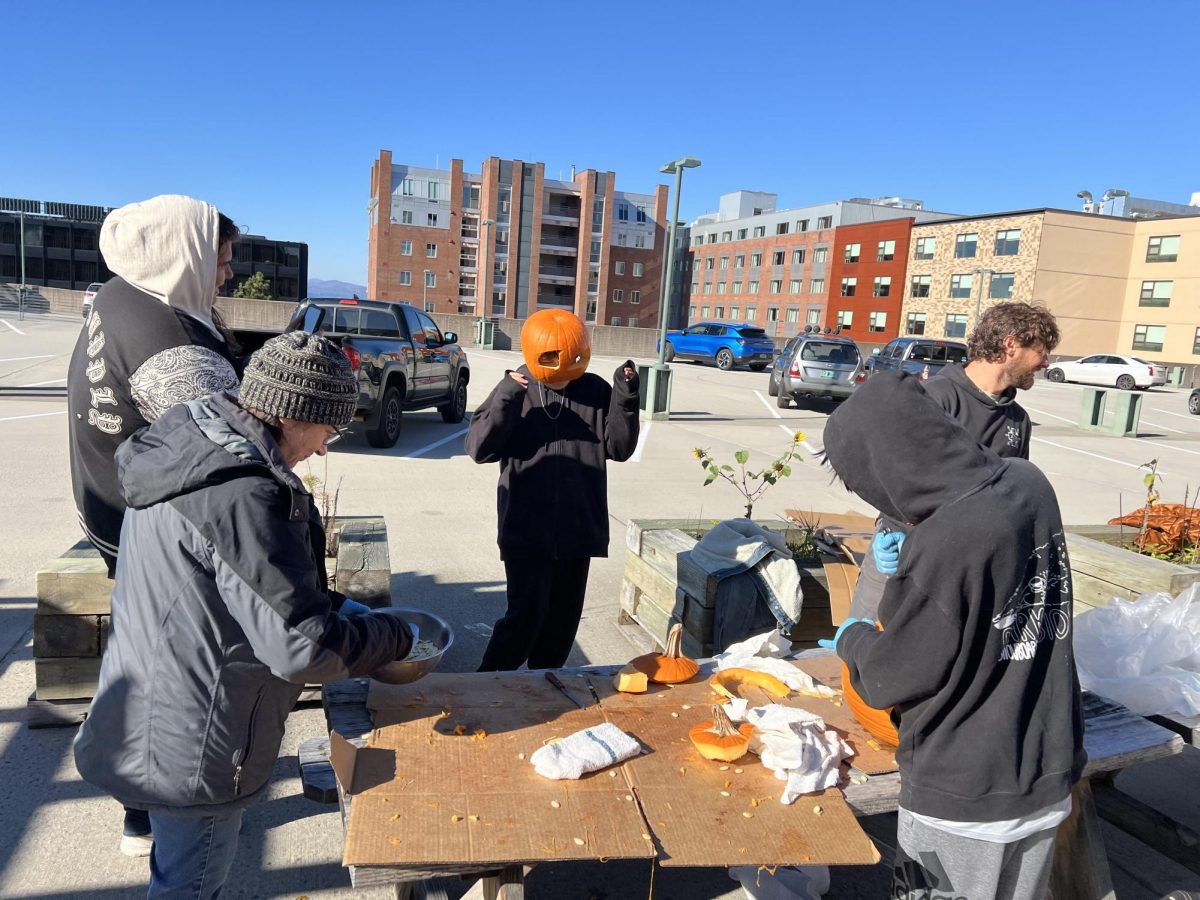
In the deep October chill, a teacher hands out knives to her students. They’re on the roof of the BHS parking lot. They are talking and laughing with each other as they stab and slice their knives into…pumpkins. This pumpkin carving activity was a part of the Succeed program, a program that aims to help students who need more individual support to complete their schooling.
Beth Fialko-Casey was one of the Succeed teachers who were on the roof passing out knives. She has been a part of the program since its creation.
The goal of Succeed is incredibly simple, “it’s helping students learn how to do school and get the credits they need to continue on a path toward graduation,” Fialko-Casey said, “It just provides a small setting for some intense support.”
Brennan Carney is a government teacher who also teaches Succeed classes. He said that Succeed operates as “a school within a school.” He said it’s a program for students who don’t thrive in the general classroom setting.
“It could be many, many reasons why a traditional setting might not work, and so therefore, it gets a little bit more hands-on approach,” Carney said.
Fialko-Casey gave an array of reasons students may be harmed by the traditional school model:
- Anxiety and overstimulation due to the constant transitions and size of school which can cause some students to shut down
- Reading or writing skills that aren’t capable enough to access important classroom content
- Social or emotional health issues that result in a complete lack of engagement in class
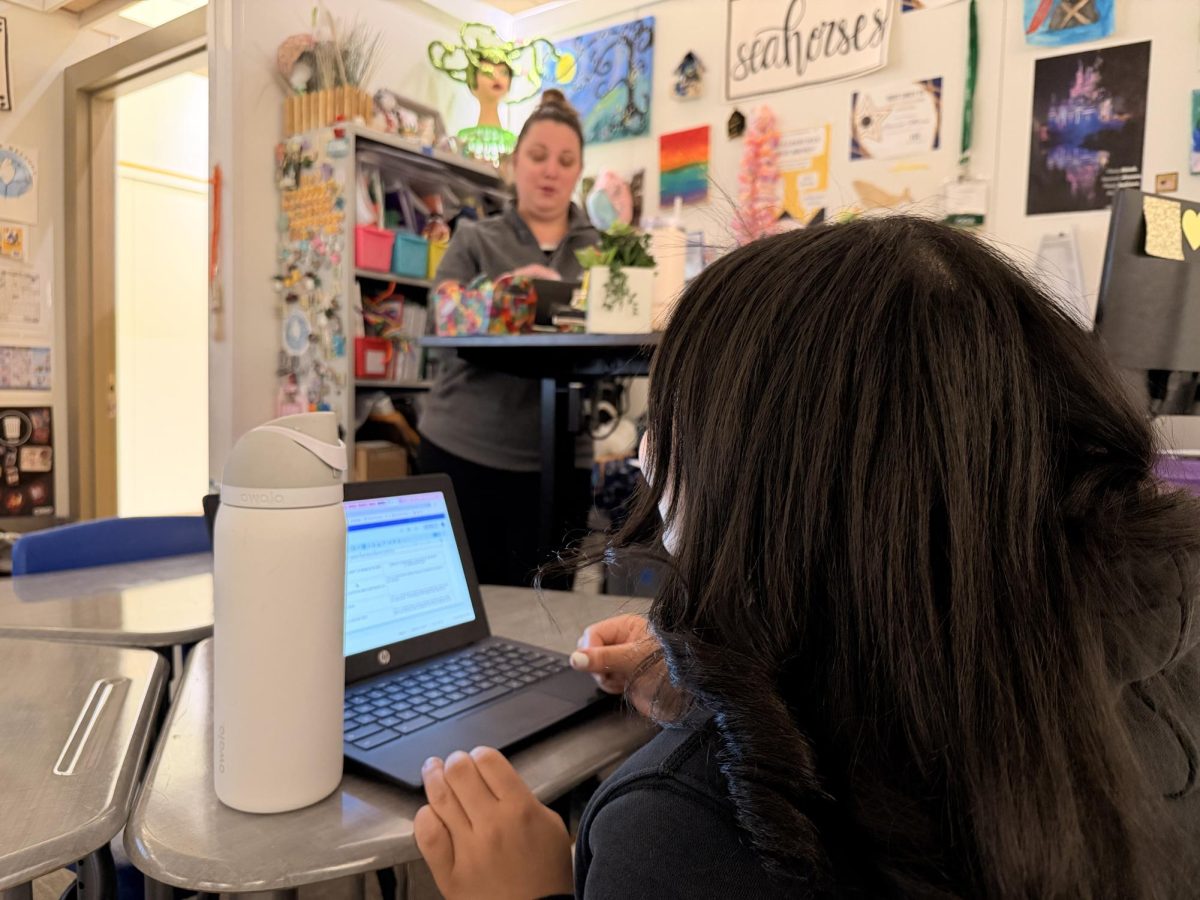
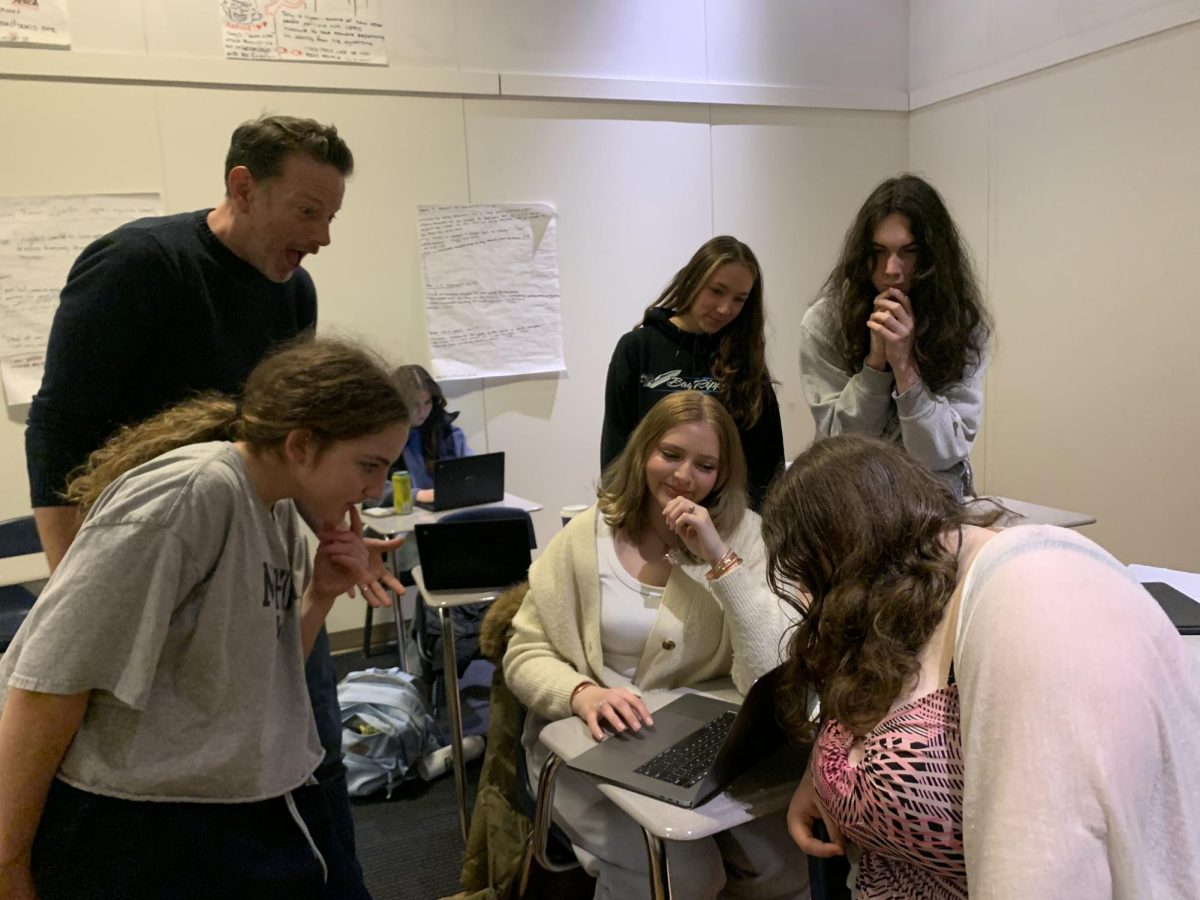
Students in Succeed are given help that is more tailored to their issues. In Succeed, Fialko-Casey goes around the room checking in with each of them individually. The space itself is very quiet and small to minimise distractions and keep the environment calm.
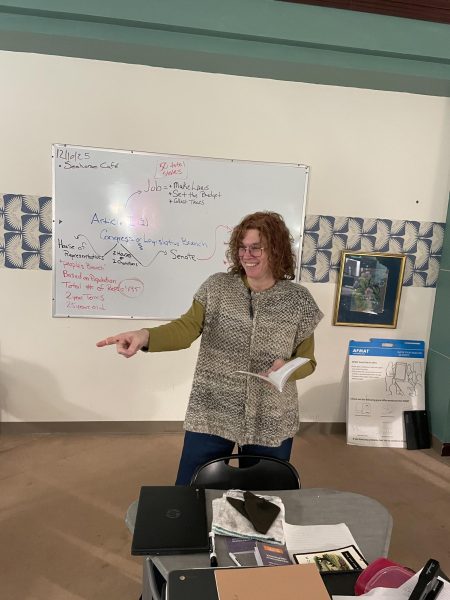
“Even if we have 15 students in the room, it’s built around them having content at their challenge level, skills at their challenge level and really you can do a lot of individualization,” Fialko-Casey said.
“Really you can do a lot of individualization, which is really hard on the teacher, to be candid, to try and individualize 8 to 10 different plans around the same proficiencies and maybe that’s also why [students] get lost in the general classes,” Fialko-Casey said.
With the broad net that Succeed casts, the individual teaching of each student can look completely different.
“So today I worked with a student who reads at the college level who just has not for years, even throughout middle school, really felt like what we do here matters,” Fialko-Casey said, “and so that’s a different one-to-one conversation and work all year than the student who always shows up, is super social, loves to meet people, actually builds relationships really well with teachers, but just doesn’t do work because it’s so hard for them.”
The program itself has undergone many changes and has been significantly reduced from what it was when it started. Former Principal Noel Green created the program in 2020 and it was staffed every block by two English teachers, a special educator and an English Learner (EL) teacher.
“Noel saw a lot of, at this time at school, black male students not reporting to class,” Fialko-Casey said. “And Noel, as a black man in this world, understood the systemic issues that fostered that attitude toward learning. And so he wanted to intervene pretty dramatically.”
The program also included funding for getting food and tea for the students everyday and even a social worker that would go to kids’ houses if they didn’t show up for school and knock on their doors – and sometimes, according to Fialko-Casey, they would even “pull them out of bed”.
Fialko-Casey said the number of staff it took to support that program was not sustainable, and the program was reduced by a previous superintendent.
This year the program changed to have both a 9th grade and a 10th grade Succeed class. Carney said this allows more students to access the program.
“And they’re also in different places in education, therefore you can kind of tailor it to the needs of that specific group because you have the tenth graders who have been here for a year and you have the ninth graders that are just coming in,” Carney said.
Carney also teaches AP Government to seniors and said he appreciates seeing students “from a different lens”.
“Just [the] reality of needs and wants and desires around school,” Carney said. “It’s always a good perspective as a teacher to get varying students.”
Fialko-Casey agrees.
“It’s a different challenge, [a] different professional challenge,” Fialko-Casey said. “So I really like the balance of working with all different populations in my day.”