


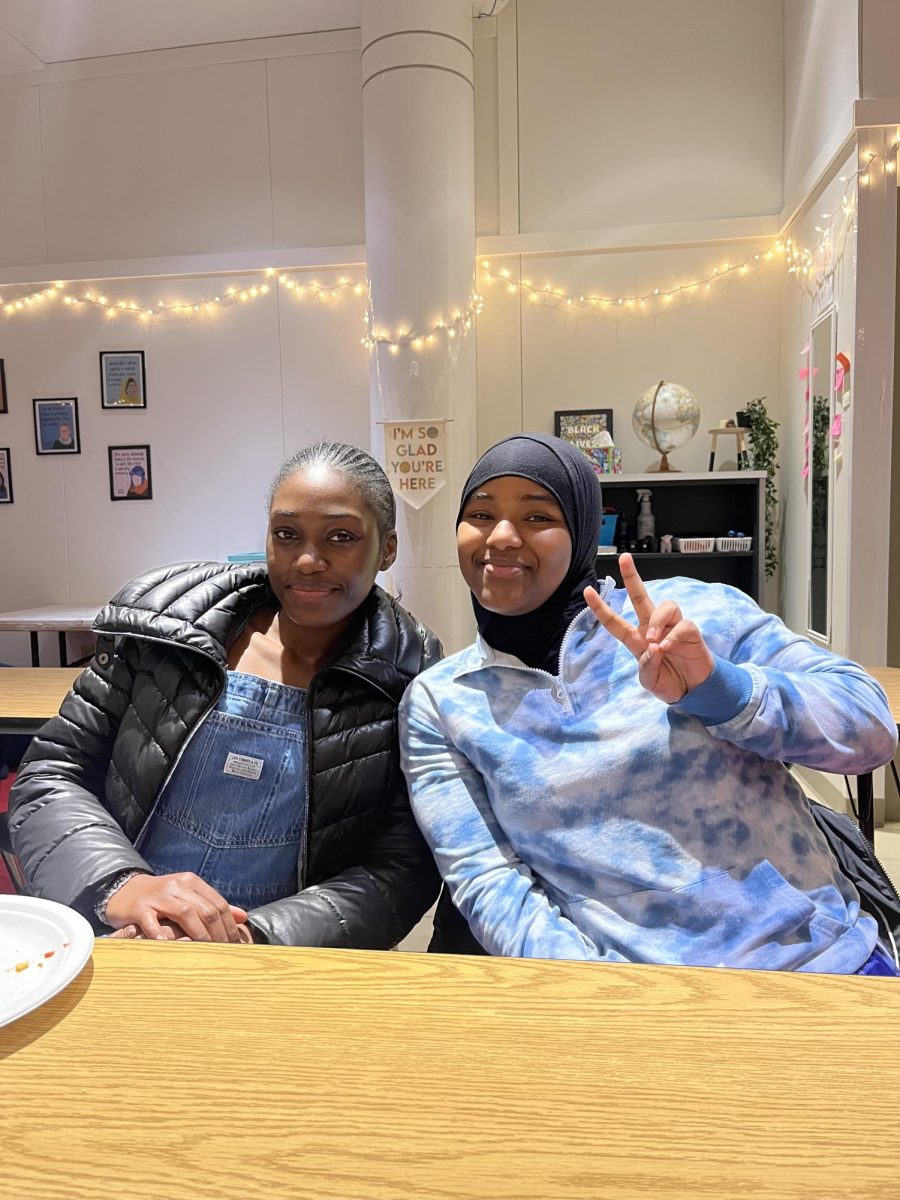
Barwaaqo Sugow ‘26 said she definitely feels like there’s a disproportionate number of black students to white students in honors classes. Both Sugow and Gladis Mbilampassi ‘26 said that this discrepancy makes them feel “out of place.”
“I felt [like] I was dumb. All of the white students would speak up and say their ideas, and I’m a quiet person, but then with the added pressure of being the only black student, I was like, ‘I can’t speak,’” Sugow said.
Mbilampassi shared a similar sentiment.
“You feel out of place, like you don’t belong there. You feel like you don’t belong there in terms of, like, ‘maybe I’m smart enough to be here, but I’m not smart enough to be here’,” Mbilampassi said.
This year the district compiled data comparing the number of students of color to the number of white students who have been recommended, enrolled and dropped out of advanced classes, but that information has not yet been released to the general public.
However, the 2024-2025 BSD Annual Report showed that students of the global majority made up 42% of the BHS population, but only 28% of those students were enrolled in any type of honors or AP class.
Principal Sabrina Westdijk said that one of the district’s strategic priorities is reducing the disparity of enrollment in AP and honors classes. Westdijk said they have been trying to pinpoint where disparities start showing up: during initial recommendations, student registration, scheduling, or retention.
“What we’re learning so far based on that data is there are opportunities at all four of those steps,” Westdijk said.
To get into an AP or honors class, students must first get a recommendation from their current teacher.
As a freshman, Sugow knew she wanted to take Honors Biology, but thought she had to wait until her sophomore year. However, Sugow overheard her peers talking about taking biology, so she approached Dr. Kohler, who helped her get enrolled.
“I feel like, if I didn’t go up that day, I wouldn’t have been where I am with my science courses,” Sugow said.
Superintendent Flanagan said that students told him that they have felt “subtly discouraged” from taking high-level classes.
“We know it’s important that we are all mindful of how our conversations with students can impact their decisions,” Flanagan said.“I know we all want students to achieve at high levels, and I think sometimes we unintentionally underestimate what our students are capable of.”
When Barwaaqo Sugow ‘26 took honors chemistry, she was the only black student in the classroom.
“I just feel like they [students of color] weren’t really, like, given the option to take it, because, I believe, teachers thought, ‘oh, they probably can’t handle it’, or something like that,” Sugow said.
Westdijk said that teacher support plays an important role in keeping students in class. According to Westdijk, departments that proactively recruit students to pursue AP or honors classes tend to see a greater racial balance.
“It’s one thing to be told I have the opportunity, and another thing to be directly invited by a teacher to pursue it, which to me as a student, tells me, like this person believes in me, and I might not totally believe in myself, but they’re they have this vote of confidence that I can do it, and that makes me take the risk, right?” Westdijk said.
Superintendent Flanagan said that the district would definitely consider removing recommendations from the class selection process.
Beth Mintz is a retired UVM sociology professor. Professor Mintz said that the most important factor in a student’s academic achievement is their socioeconomic status, more precisely, income, parents, level of education and wealth.
“In general, white kids and kids of color have different levels and access to cultural capital, and it’s the information and the knowledge that helps them navigate the school system,” Professor Mintz said.
When Abdi dropped AP Statistics this year, Principal Westdijk had a conversation with Abdi and her mom. Abdi’s mom said she didn’t know that any of this was happening and asked Abdi to talk to her when she is struggling.
“But this isn’t an issue of just like, ‘I need to vent to you today,’ Abdi said. “This is the weight of my schooling that I’ve been carrying since middle school.”
In AP classes, Abdi overhears students talking about their impressively packed schedules, long list of extracurricular activities, and wonders, ‘What is going on?, What is different?’
“Why am I crumbling under the weight, and they’re not? And then you realize, because they go home and they feel comfortable, their parents pick them up and drive them places, and help out as much as they can. When they succeed in school, they get positive feedback, positive reinforcement,” Abdi said.
According to Abdi, her parents would’ve supported her more if they knew how much it could benefit her education. Abdi’s parents immigrated here from a refugee camp in Kenya and are just not aware of how school works here.
“[They would’ve] come to parent-teacher conferences, tried to learn about schooling, helped me search for colleges, given me their tax information, made the process so much easier than they have, but that’s just not a value to them. They’ve done their job. They made me, they brought me here. I have to do the rest,” Abdi said.
AP African American studies is the only advanced class where the racial divides do not exist. There are no prerequisites required for enrollment to this class.
Sugow and Mbilampassi both took AP African American Studies (APAAS) last year. According to Sugow, in APAAS, everyone was talking to each other and interacting, as opposed to AP Government & Politics, where she claims people keep to themselves.
“That just felt like the best class to start my AP journey because there were so many people of color. I felt confident. I felt free to be me, to talk,” Mbilampassi said.
Mbilampassi said that the content felt like something people of color could relate to.
“You felt very well connected, like it was relevant to you in some ways, and then [combined with] the people who made up the class, it just felt perfect,” Mbilampassi said.
Sugow agreed.
“I feel like the content was important, but I feel like the makeup of the classroom played a more significant role because [you’re with] people who look like you and we were all learning about the history of African Americans,” Sugow said.
AP African American Studies teacher Korey Whitfield said that it is important for students to be surrounded by peers who are willing to support one another.
“I would want other students that I feel comfortable and confident with, and that doesn’t necessarily mean they have to look like me,” Whitfield said.
The district said it is currently working on several things in K-8 to eliminate these racial disparities in high school such as clarifying and aligning grade level standards, adding a test in K-4 to catch students who are off-track and doing things like “actively counseling” students to take Algebra in middle school and pursue advanced classes in high school.
In the meantime, for students who are already in high school, Mbilampassi said it would be helpful if teachers would encourage more students of color to enroll in advanced classes.
“How am I expected to excel when there’s literally no other student like me? I’m bound to fail.”