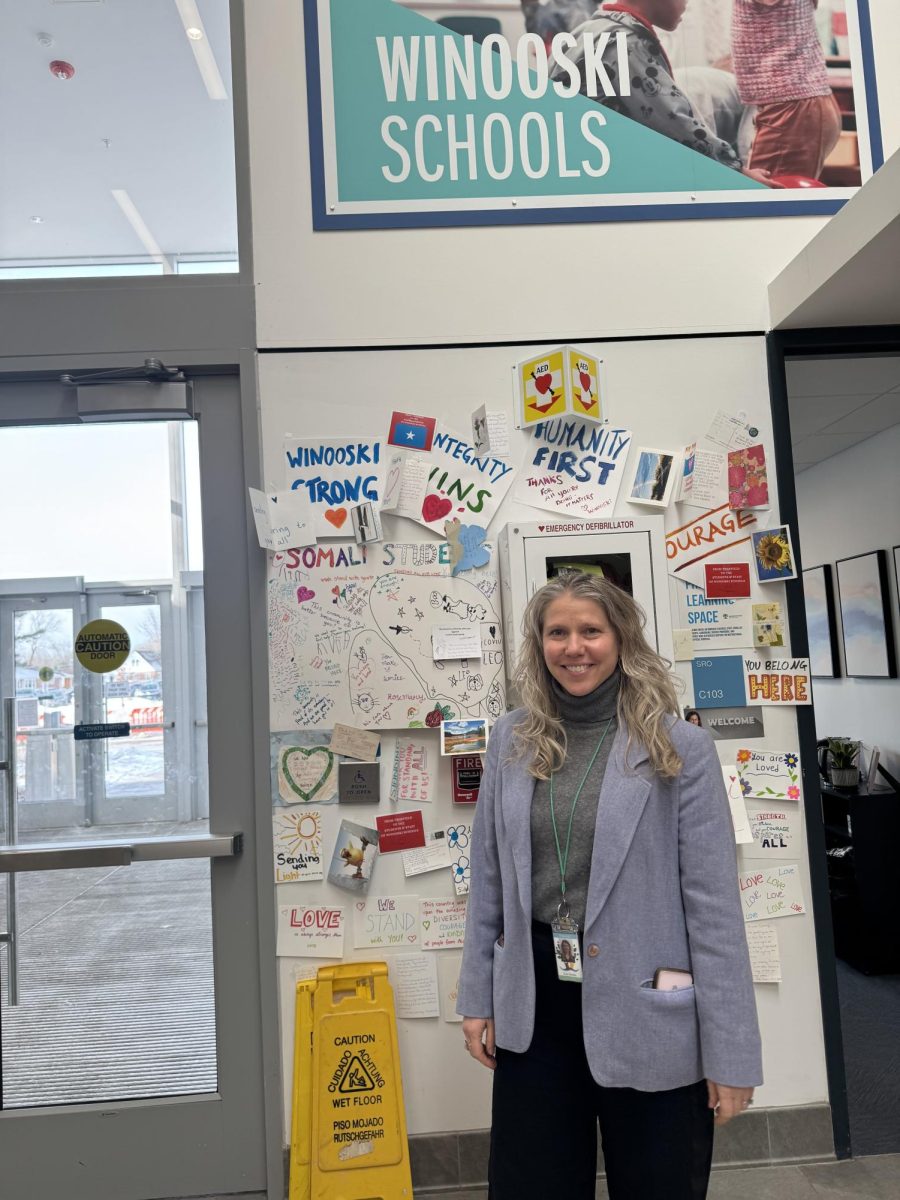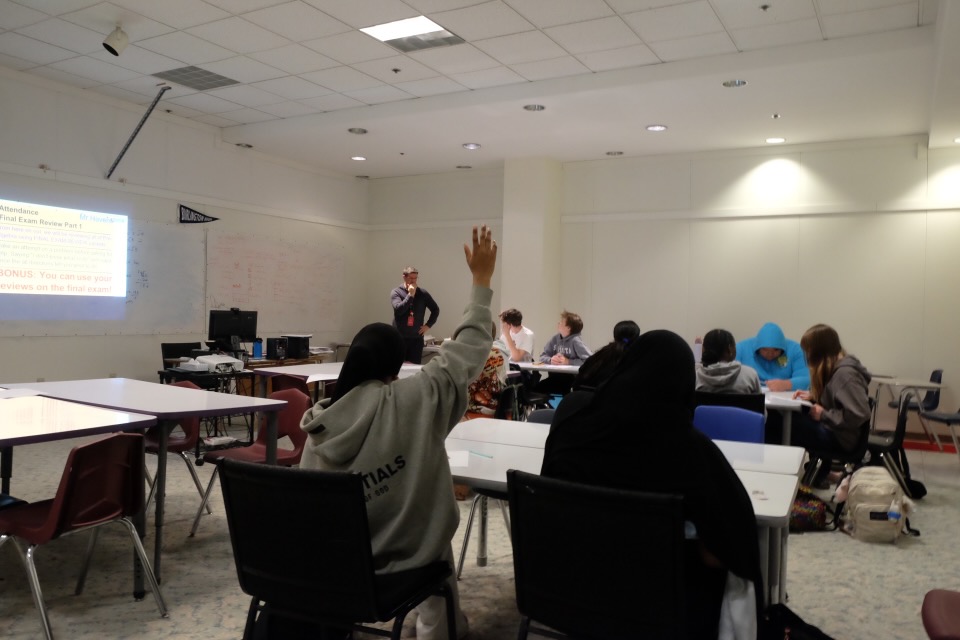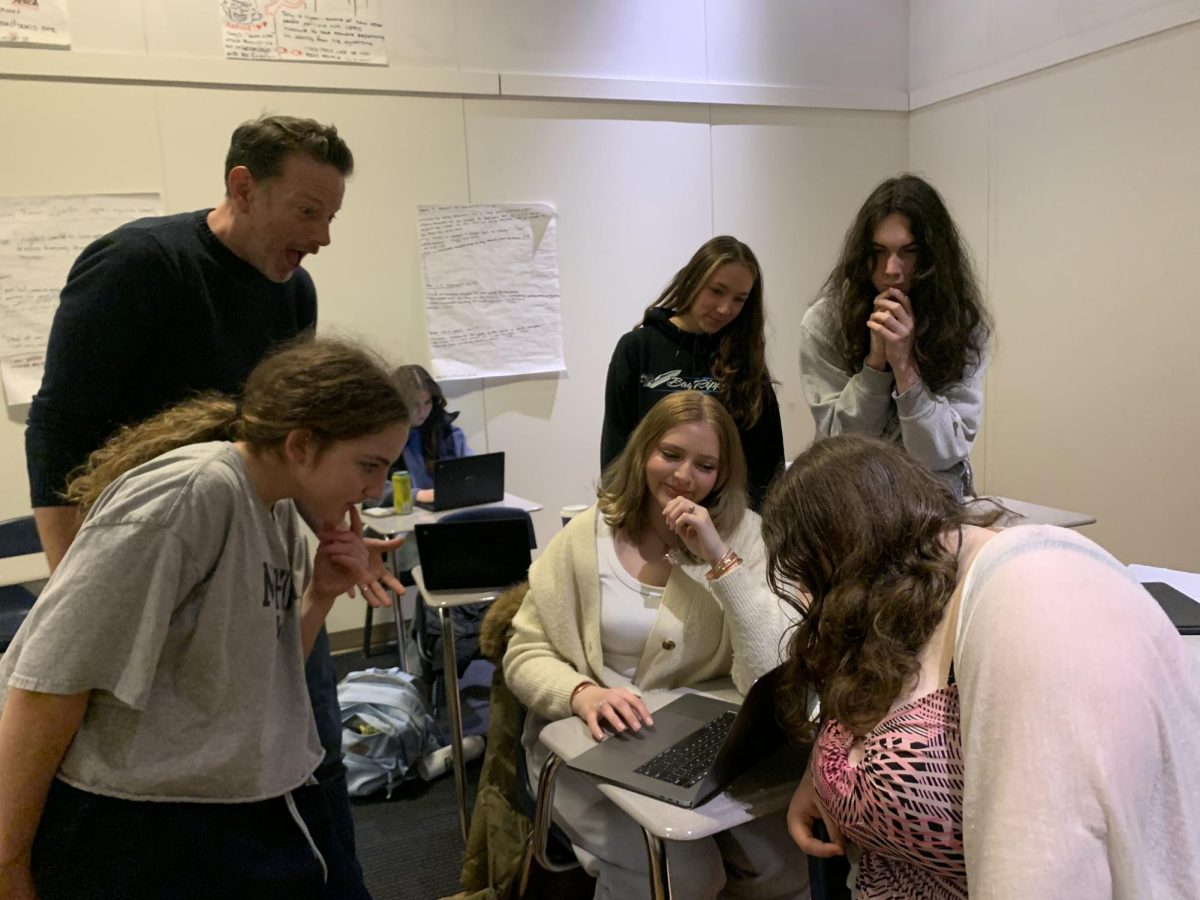


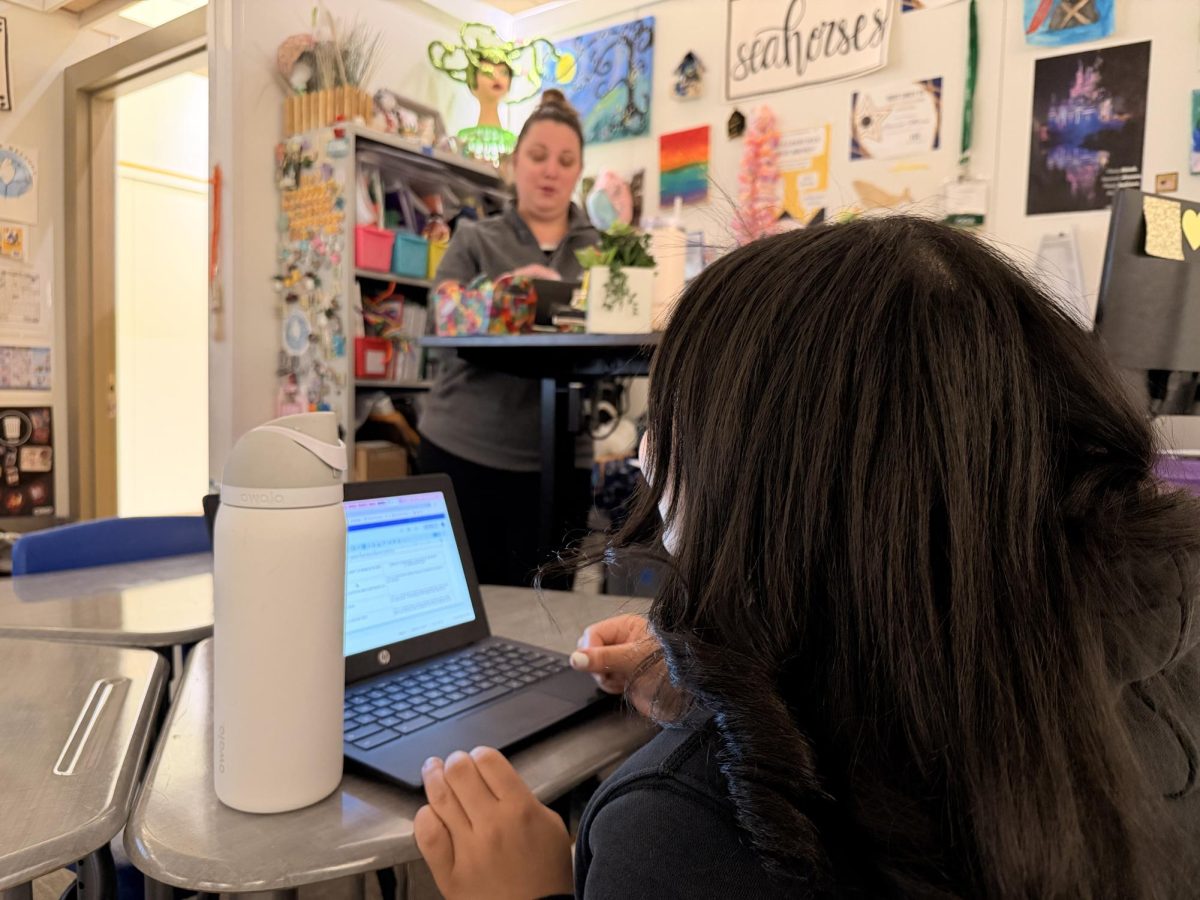
Reading Specialist Lauren Morse clicks through a slideshow on prefixes and suffixes, pausing to have students circle them in each word and ensure they are following along. Books line the back wall and everywhere you look, you’ll find posters about the silent e, open syllables and something called the “shwa”. Morse teaches reading all day, every day at BHS.
“There are so many students in this building that aren’t reading at grade level, and it’s only like the numbers are getting higher every year,” Morse said.
Morse’s experiences mirror the nationwide decline in literacy rates among high school students. In 2024, reading scores for high school seniors fell to a new low. Data from the National Assessment of Educational Progress (NAEP) study showed that only 35% of 12th grade students scored at or above proficient in reading, down from 37% in 2019.
In a Register survey given to students, 57 students said they were “very confident” in their abilities to read and understand long or complex texts, 35 said they were “somewhat confident” and only 5 said they were “somewhat” or “very” unconfident.
However, a separate Register survey showed that teachers do not agree. 12 of the 13 teachers that responded said that the national data showing a growing literacy gap aligns with what they’ve noticed in the classroom.
Social studies teacher Dan Hagan said that current APUSH students are taking longer on homework than students from a decade ago. Laura Sercel uses Newsela which has a function for rewriting articles for different reading levels. Sercel said she has had to select readings listed as below grade level for her Social Studies class to try to make sure all of her students could access and understand the material. Even so, it’s not enough.
“I’ve heard comments like, Oh, these [below grade level] articles are really hard, or it’s really hard to understand the main idea from this article,” Sercel said. “And I do think that that is a general change in what I’ve seen.”
When it comes to the causes of the decline in literacy educators point to different things such as students falling behind from the pandemic and screens. Some teachers point to students’ habits outside of class.
“I think, broadly speaking, our expectations for students reading outside of class are too low, and it makes it very hard to teach several books in a year when kids don’t read anything outside of class.” Kathryn Buchan, an English teacher, said.
Reading specialists Lauren Morse and Shannon Dixon-Yandow teach reading classes at BHS. They say our education system at all ages plays a role.
“Our education system has jumped making students at younger ages do more advanced skills and not spending time on those introductory skills,” Yandow says.
However, the decline isn’t a product of only lower grades they say.
“Higher education for teachers also does a terrible job at teaching teachers how to teach reading,” Morse said. “I had one course at UVM that focused on reading, and it was really how to implement a reading program…I graduated with my degree in Elementary Ed, not having any clue how to teach reading.”
Morse and Dixon-Yandow did a training for teachers at the beginning of the year where they tried to help teachers understand the reading needs of their students.
“We don’t expect everybody to be a reading specialist in the building, but this day and age, you have to know how to support reading,” Morse said.
Superintendent Tom Flanagan noted in his letter to the district about the proposed budget that they aim to lower the achievement gap through “Strengthening early literacy through universal screening and training in the science of reading.”
Morse says that promoting literacy is a collective effort to support students and their futures.
“Because if they can’t read, they’re not accessing the material. And that’s not equitable, that’s not fair, and it’s just not right,” Morse said.