

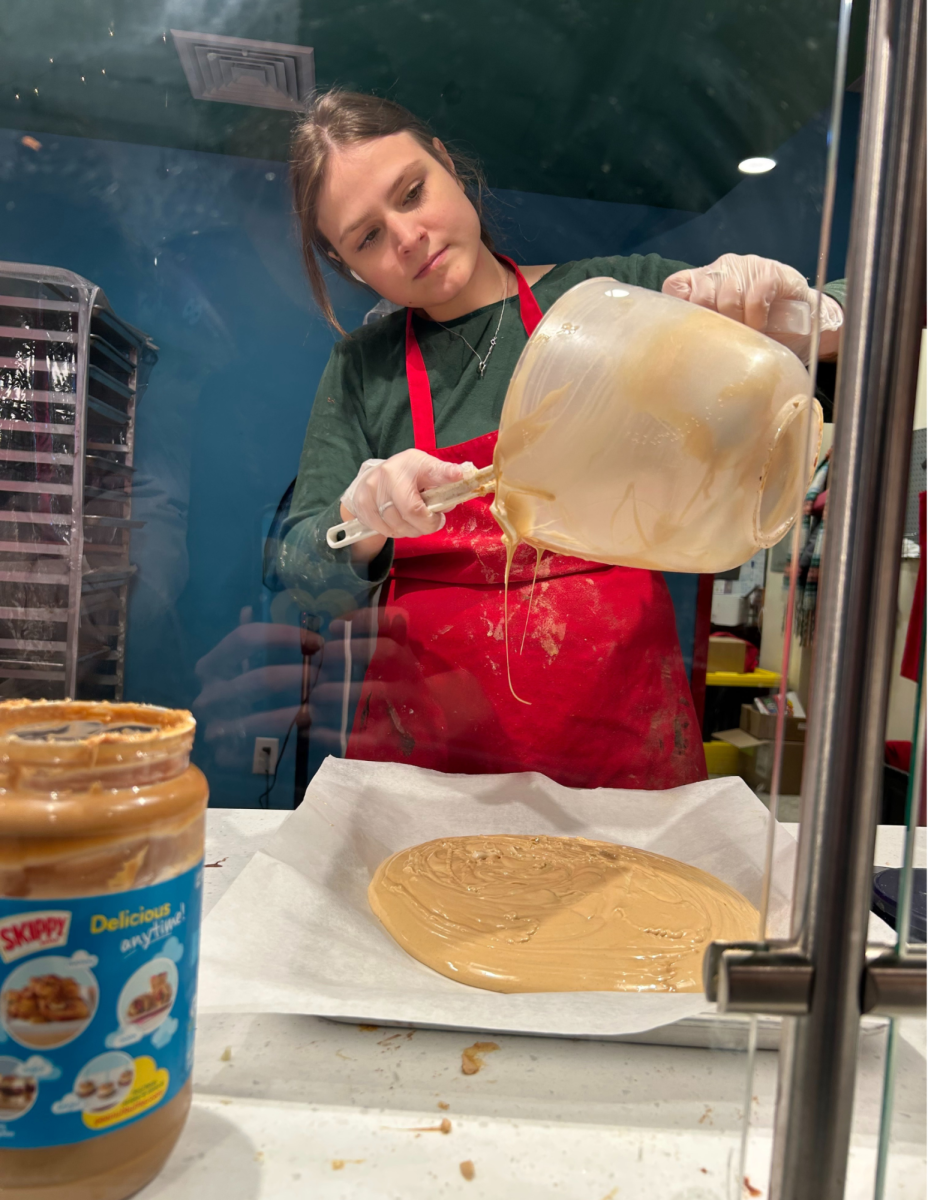
Jasper Roberts is a chocolatier at the Whizbangs candy store on Church Street. She, along with the other chocolatier Ana Ferdock, works behind a plastic partition at the back of the store.
Ferdock works with a big sheet of fudge, slicing and sectioning the chocolate. With the store’s large stock of chocolate, it gives visitors the illusion that there’s an endless supply.
But we are in fact currently experiencing the worst global cacao shortage since 1977, mainly caused by climate change. Côte d’Ivoire and Ghana produce 60% of the world’s cacao, both of which have been experiencing hotter temperatures in recent years, which has led to crop diseases and droughts.
“Our main sales are in chocolate, and I’ve wanted to be a baker for a very long time, so this is a very big dream for me,” Roberts said. “Having to work with something that is in big demand and can’t always be provided is worrying.”
The cacao shortage will cause problems not only for humans, but also for the environment and wildlife that rely on them. Cacao trees help provide nutrients to the soil, which many other plants use to grow and reproduce. Because of the trees being unable to produce as many cacao beans, the amount produced has declined over the past few years, leading to prices rising over 4 times.
Maddi Foster, the manager at Lake Champlain Chocolates, said that the prices they’ve been paying for cocoa have been increasing over the past few years. This, in turn, has caused them to increase the price of their chocolate twice since 2023.
¨We definitely deal with the cacao shortage in Lake Champlain Chocolates. We’ve had to start buying some of our chocolate in bulk and then signing new partnerships to help with that,” Foster says.
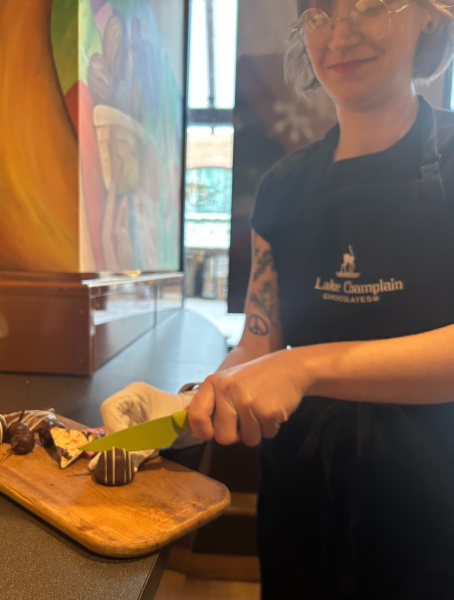
Lake Champlain Chocolates isn’t the only one increasing its prices. The average price of a bar of chocolate from a grocery store in the U.S. has increased by 41% since 2021.
According to the Atlantic, the chocolate candies that stores sold this Halloween had less chocolate than normal. Companies are using different flavor fillings, due to the fact that cacao production is declining. Some chocolates even contain non-chocolate coatings or fake chocolate coatings.
Tariffs could hurt prices even more. In April, President Trump threatened to implement a 20% tariff on cocoa products being imported from the Ivory Coast, but then suspended the tariffs implementation.
Humanities teacher Bowen Stephens is a self-proclaimed chocoholic. She can’t imagine a world without chocolate.
“I’d fear for the experience of people who’d have to share the same space as me,” Stephens said.
While chocolate is unlikely to disappear, if the climate conditions in West Africa stay the same, the cocoa supply will continue to decline, and chocolate lovers like Stephens can continue to expect even higher prices.