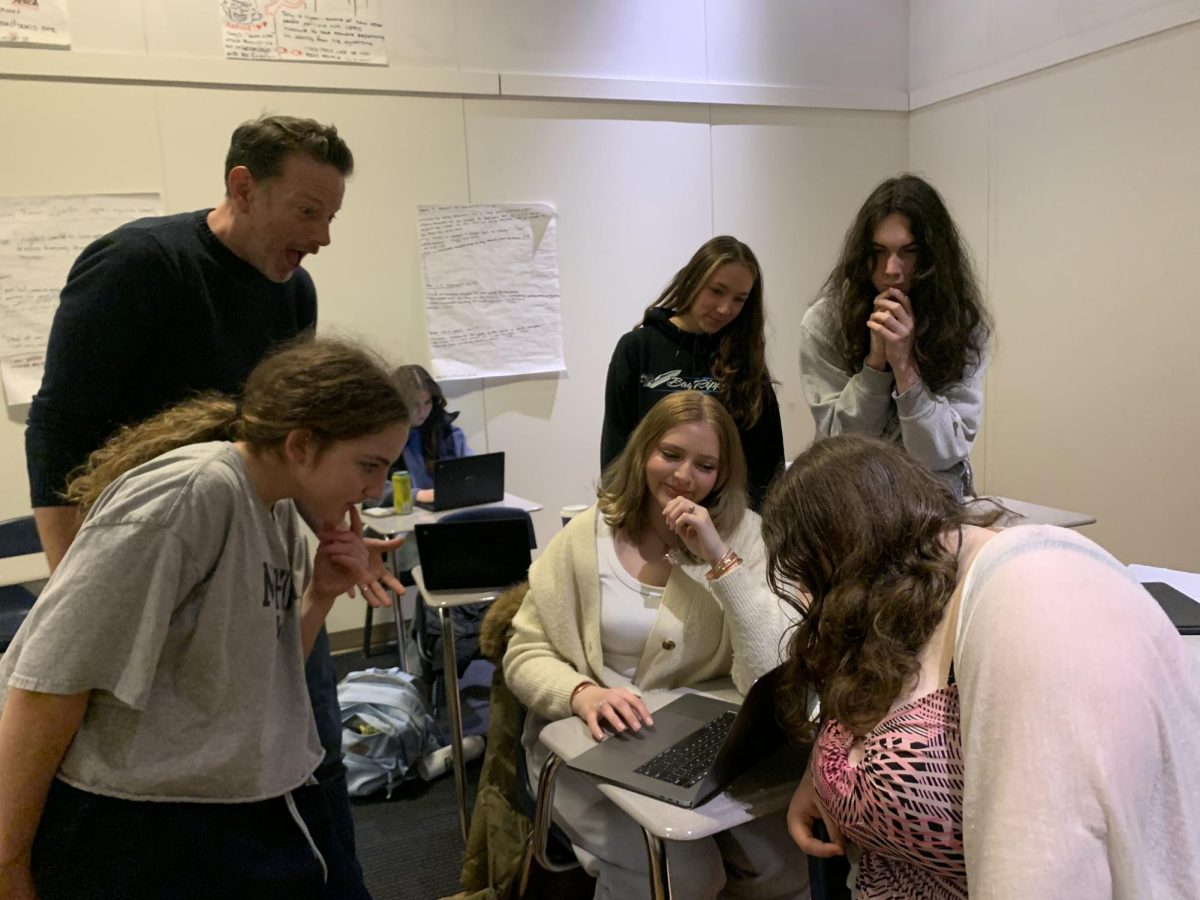


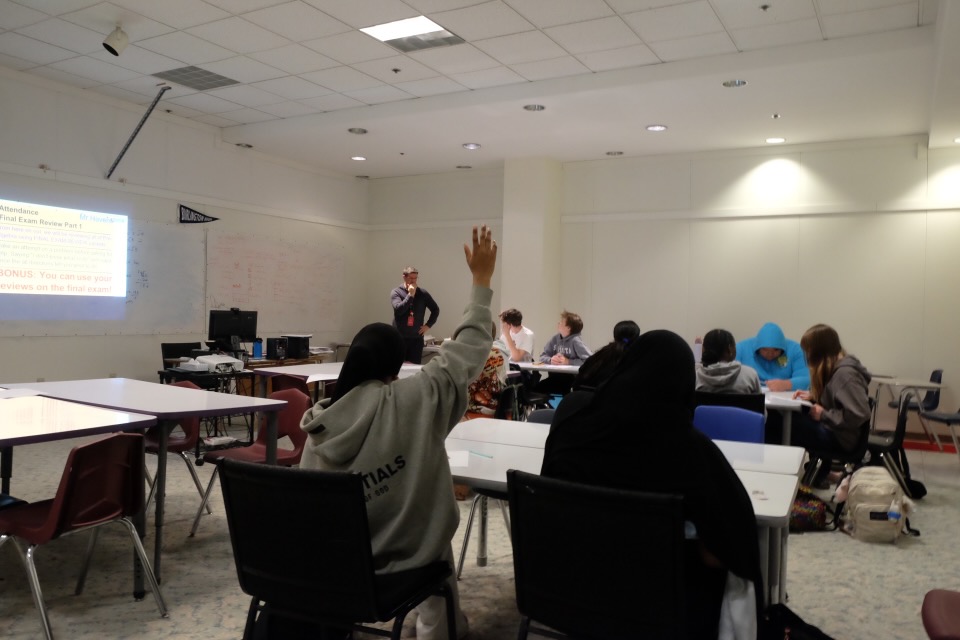
Mason Devries is one of 2.5 teachers who will not be coming back next year due to budget cuts. He has taught five science classes since 2024, he takes an active role in the optional weekly 9th-grade meeting created to help freshmen be successful and he’s the sponsor of the Dungeons and Dragons Club.
“It’s been really cool to see this community space for people who just want to hang out and use their imagination together,” Devries said. “Because [the club] ends up just being a safe space where people can be creative in a different way.”
Devries has not been able to find someone to sponsor the club next year.
The cuts are due largely to declining student enrollment. The Burlington School District has lost 19% of its K-12 population since the peak in 2012 of 3,659. In addition, Act 73 goes into effect next year, requiring that classes have at least 18 students.
Math teacher Mike Havens said he understands that we need to ease the burden on taxpayers. But he finds it harder to teach a class of ten students who need one-on-one help than a full class of 24 students who are all on grade level.
“Did they actually put forth the research to ask teachers and administrators [the impact of] restricting class sizes?” Havens said. “Is there going to be not enough student per teacher ratio to help those in need?”
Principal Westdijk worked with Allie O’Hara and Department Lead Teachers to decide how many sections of each class will run next year. Some electives were cut altogether, some are running fewer sections and some are running in alternate years. For example, History teacher Korey Whitfield’s elective ‘Beyond the Pyramids’ will not be offered next year.
Exceptions to the 18 class size in Act 73 include terminal courses (classes that are the highest level of that subject), flexible pathways and Advanced Placement (AP) courses.
The BHS administration has decided not to divide AP courses into sections smaller than 18, which means some AP courses will have more students than is legally required. Principal Sabrina Westdijk said it wasn’t necessary to use this exemption because “all our AP offerings are running.”
Ben Heintz created the Hippocampus tutoring center at BHS. He said “it feels a little weird” to make an exception for AP classes.
“It is a little harsh, because those are the kids with the most advantage already, right?” Heintz said.
The Hippocampus center is another exception to the 18 rule and a handful of teachers have agreed to help in the center to supplement the loss of one of their classes.
“We’ve been trying to build the [tutoring] system [for a long time],” Heintz said. “But it’s a nice side effect that needing to staff that system of tier two support can accommodate a couple of teachers who might have time that’s lying around because of this law.”
Westdijk has worked in rural districts in Vermont, and said her experience across the state has shown her firsthand how tricky it can be to staff and run schools without proper funding and enrollment numbers. She was concerned that not all students across the state are prepared for college and beyond.
“I do think that we could do better as a state to provide a more uniform and consistent, high-quality education to all of our students,” Westdijk said. “It is an obligation to find some way to do that.”
Mason Devries may just be the first of several cuts in the future. BHS has been able to avoid firing in the past due in part to the current funding formula in Vermont that gives more money to schools that have a high need population. This has allowed BHS to avoid firing people by not rehiring for staff that leaves each year.
However, the funding formula that currently benefits BHS has been replaced with the Foundation Formula as of 5/26/26. The base amount of the foundation formula under Act 73 is $15,033 with some exceptions for underprivileged students.
Devries recognized his position was always relatively temporary. He signed on as a long-term substitute in 2024 and was not surprised when he was let go. However, Devries has felt throughout his career that every school he has worked at needs about one and a half times the staff. Every position could use more help, but there just isn’t funding.
“I think in order to truly solve the problem of schools not having enough teachers and staff to adequately support students, there needs to be a larger national-level look at how we spend our money in order to direct some more of it to creating schools that students deserve,” Devries said.