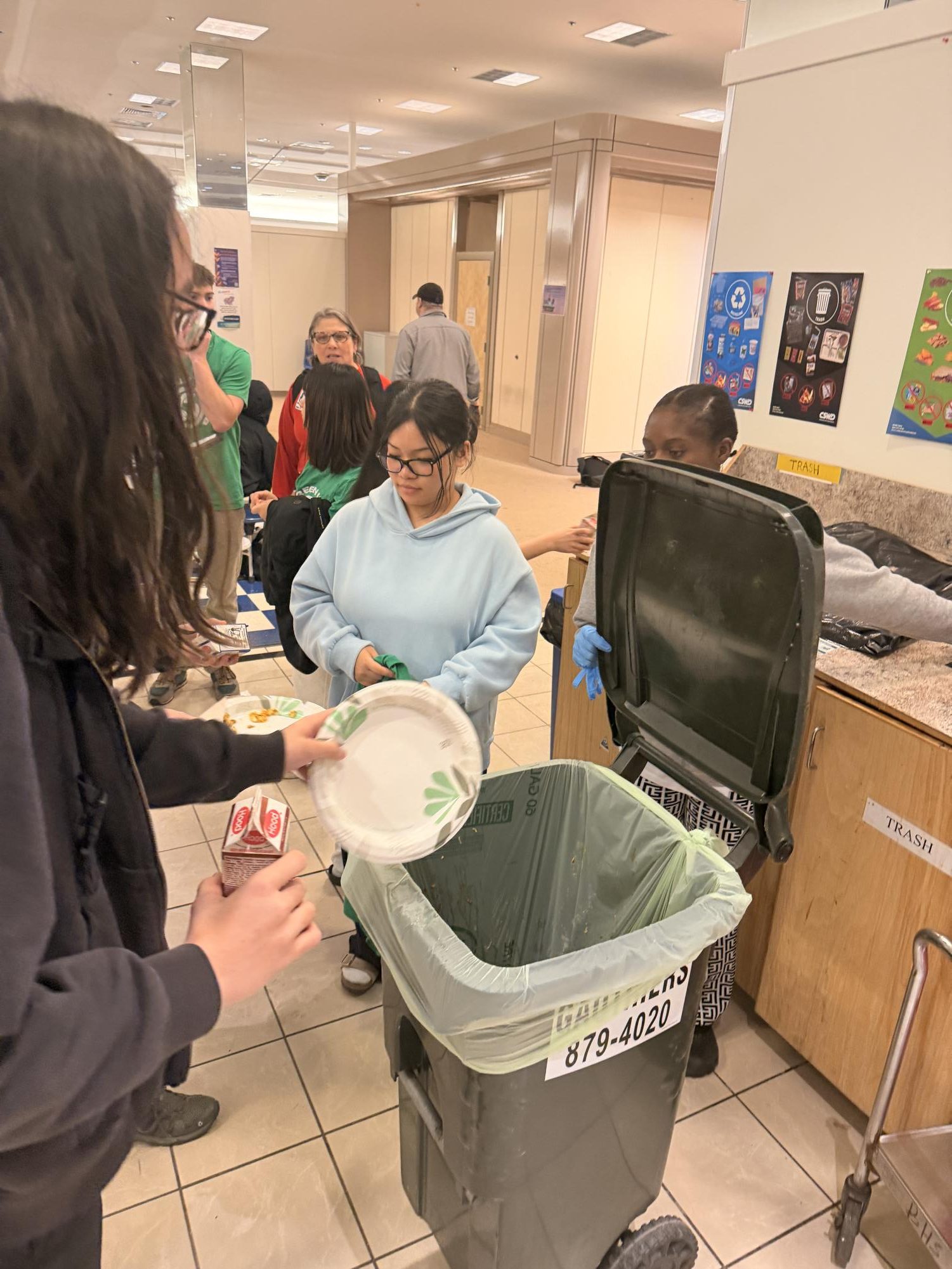
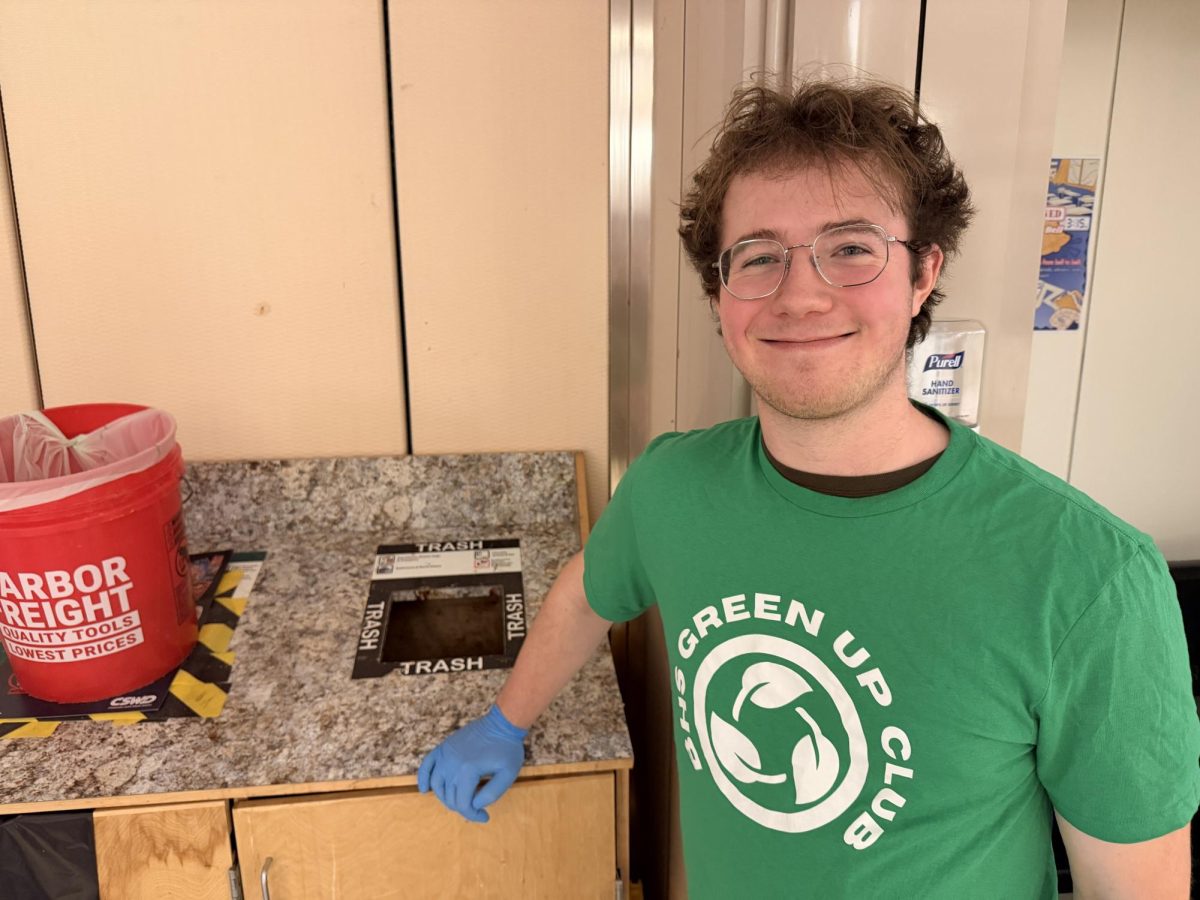
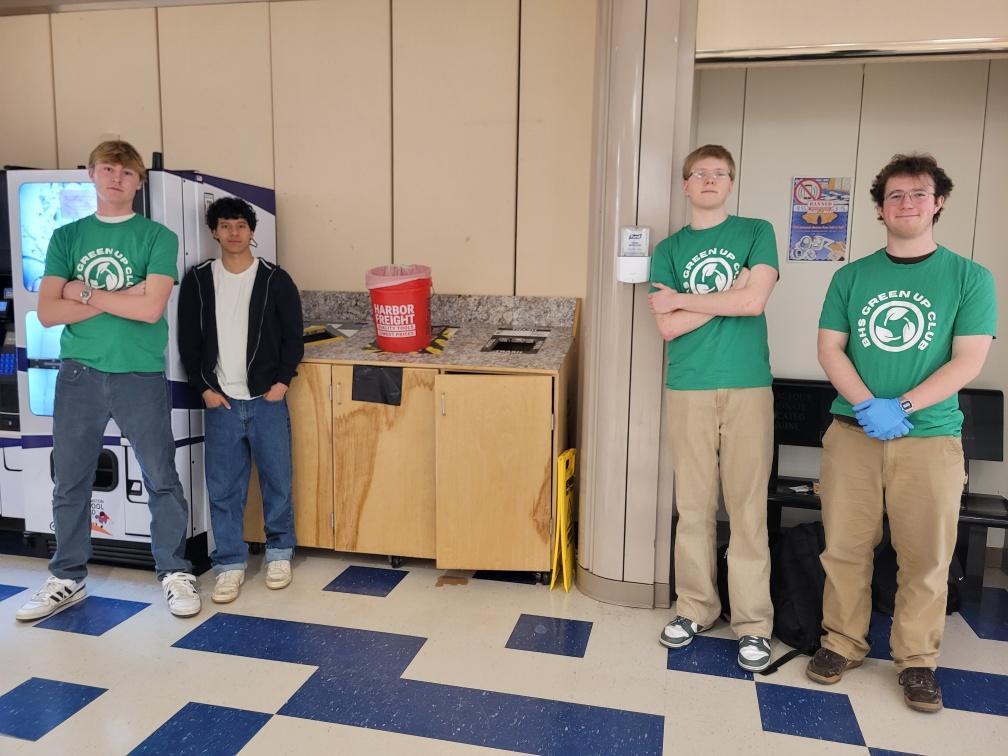
Next year when you go to throw away your lunch in the new school, the Green Up Club will be at the trash can waiting. You may have already seen these “bin monitors” in their bright green shirts, standing by the trash, gently reminding students where their waste should go.
“We actually don’t have to do much standing by the bins,” Buck said. “I think people just kind of act accordingly, based on someone who’s somewhat official being there watching.”
This student-led group is working to reduce food waste and improve composting habits at BHS. Kyle Buck ‘26 is a co-founder of the club and said it started with a desire to just clean up trash around his own neighborhood.
“We (Buck and co-founder Max Reif ‘26) saw that there’s a lot of trash and there’s not a whole lot of people picking it up,” Buck said. “But it kind of grew to be more of a community effort towards the school.”
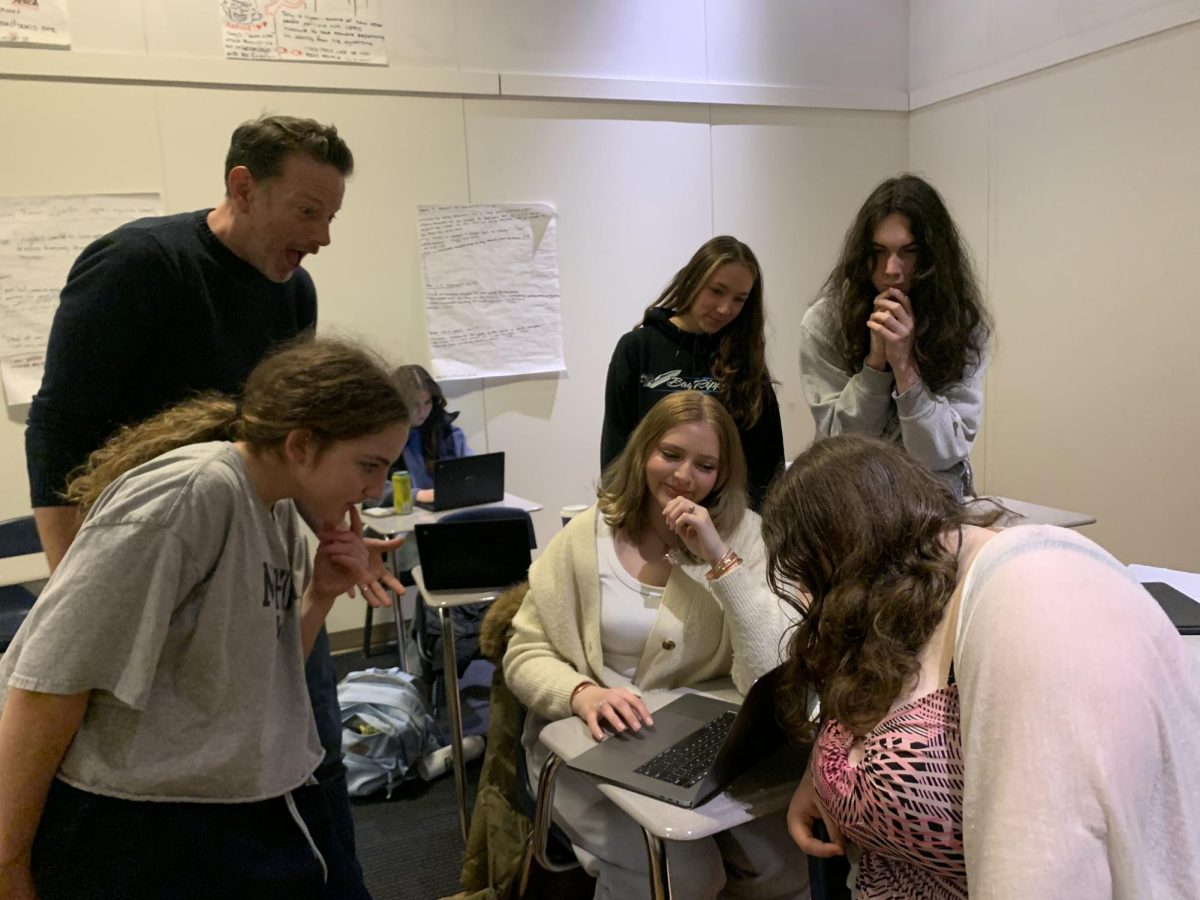
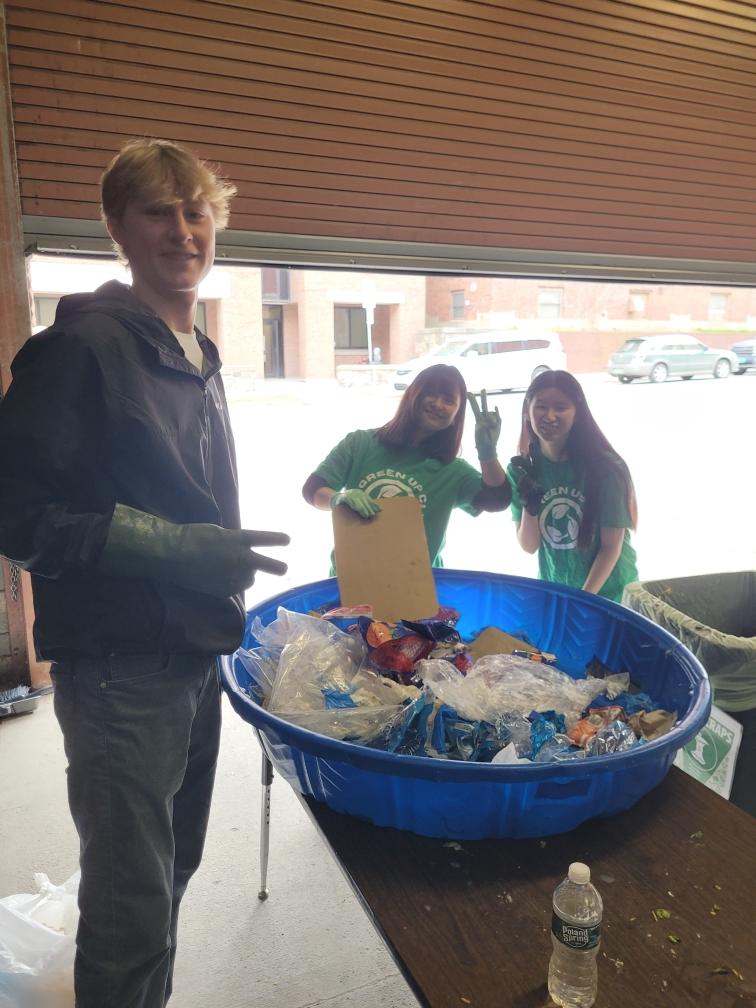
STEM Interventionist Andrew Grant is the teacher sponsor of the club. He secured a $3,500 grant with the Chittenden Solid Waste District to conduct waste audits. They’ve done three audits so far where they sort through the school garbage to see what students are actually throwing away. Grant said in an audit of one lunch they found that BHS students put 87 pounds of food waste in the trash compared to just 10 pounds in the compost.
Rhonda Mace is the school outreach coordinator for Chittenden Solid Waste and has done similar waste audits with schools around the state. Mace said students are always surprised at what is thrown away.
“Even today, there were a bunch of very usable markers that were in the trash. And (students) just kept saying, ‘Why would anybody throw this away?’”
Grant said that during their first trash audit co-founder Max Reif actually found an assignment he had done in Mrs. Skoglund’s Principles of Engineering class – four years ago when he was in 9th grade.
“She had apparently just, you know, thrown it in the recycling bin like the day before,” Grant said.
The timing of the project is intentional. With BHS moving into a new building next year, the Club sees an opportunity to reset habits.
“Recycling and composting really haven’t been a big priority as we have been in here (Downtown BHS),” Grant said. “A lot of our work is planning for next year.”
“Hopefully [next year] there are students that are actively working to make Green Up Club bigger,” Buck said, “and to make further strides for improving our waste in our school and community of Burlington.”
Grant said that his motivation is to help curb climate change. According to the US Environmental Protection Agency, food waste is the single largest contributor to methane emissions in US landfills and has an impact equivalent to 40-50 million cars. Grant said he realizes that the scale of climate change can feel like it is so big that is outside of our control and he’s not “expecting this to be 100% effective.”
“But this (Green Up Club) is something that has a big enough scale to have an impact, but small enough that it doesn’t feel overwhelming.”
Mace believes that students are the ones that are going to make people change their habits.
“People are going to listen to their peers over adults… those kids will take it back, and they will be the ones to make the change.”
So far, the results are promising. Grant said that on a day they had student monitors on the trash cans, the amount of food waste that went into the compost increased by 200%.
“It doesn’t take a lot to help your community,” Buck said. “If you just try at least a little bit, I think changes can be made for the better.”
Green Up Club meets Mondays in the Seahorse Café, and students can earn community service hours by participating.