

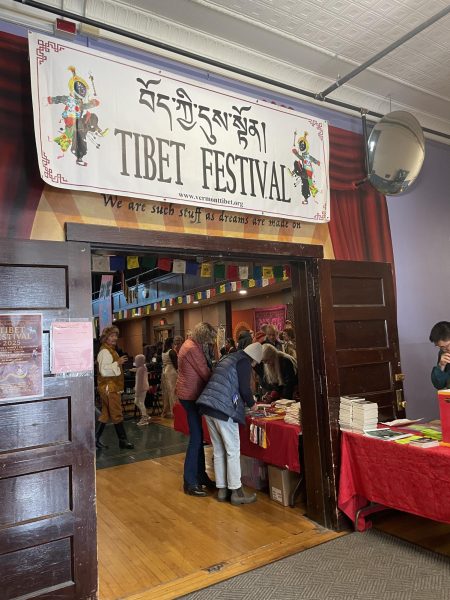
The O.N.E. Community Center was decorated with colorful Tibetan prayer flags and posters of the Dalai Lama. Groups of giggling little kids zip in and around people eating Tibetan food and browsing the vendors selling jewelry, stickers, and other items.
On stage, dancing along with her whole family was Tenzin Pasang ‘27.
“I was self-taught [how to dance], but also my family taught me, which brought me closer to my culture and family,” Pasang said.
Pasang has been going to Tibetan festivals and protests in Vermont with her family since she was little.
“[They’re] important to us,” Pasang said, “because it’s a way to carry on culture and pass it on to the younger generations so they don’t forget who they are and why we do this.”
These protests arise from Tibet’s long history of being occupied. Currently, China maintains a long-held claim on Tibet, which many Tibetans dispute. In December, dozens of Tibetans were arrested by Chinese authorities after protesting a new mining site. This is just one example of the global protests and political pressure put on China for what many Tibetans view as “cultural genocide” through the alleged suppression of religion, language, and culture. In recent months, China has begun replacing Tibetan language and history in schools with Chinese political education and military training.
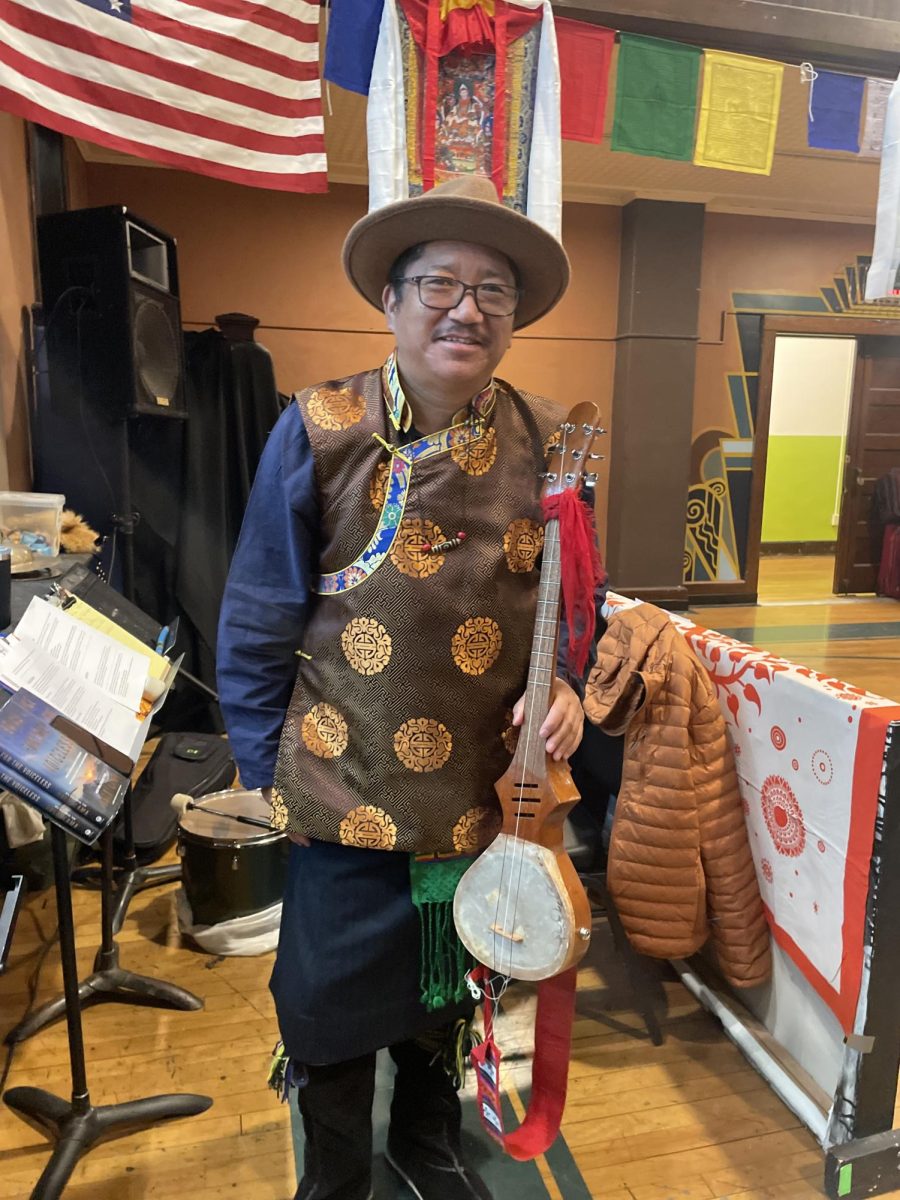
Migmer Tsering helped to organize the 21st annual Tibet festival and is often featured as a master artist, musician, MC, and DJ at events like this.
“Tibet Fest brings everybody – from elders to youngsters, everybody in the community comes together to contribute whatever individually one can contribute to make this day a bright and memorable one,” Tsering said.
Tsering himself not only helped to organize the event, but he also started “Rolyand Lobling” in 2016, a performing arts program that teaches kids and young adults Tibetan music and dance.
“Tibetans living outside of Tibet, it is our sole responsibility to preserve our identity, our culture, and to really do our level best to pass it to our younger generation,” Tsering said. “What made this festival truly beautiful was that, amid the uncertainty and distress about China and Tibet, the room was filled with joy, celebration, and life.”
Pasang described her family’s involvement in the festival and in protests as “essential”.
“It’s a way to say, ‘Tibet is still here and won’t ever leave or be knocked down and (they can’t) erase our culture’,” Pasang said.
Pasang said her grandma and grandpa grew up in Tibet and that her grandmother misses seeing dances and festivals, “and all sorts of stuff she used to.”
“If you miss or if you lose this, being a Tibetan, the flavor of a Tibetan, if we are not able to keep it, that means the whole world is losing something,” Pasang said. “The whole world is losing a flavor. That means in any way or in all the ways it is very important to preserve one’s culture.”