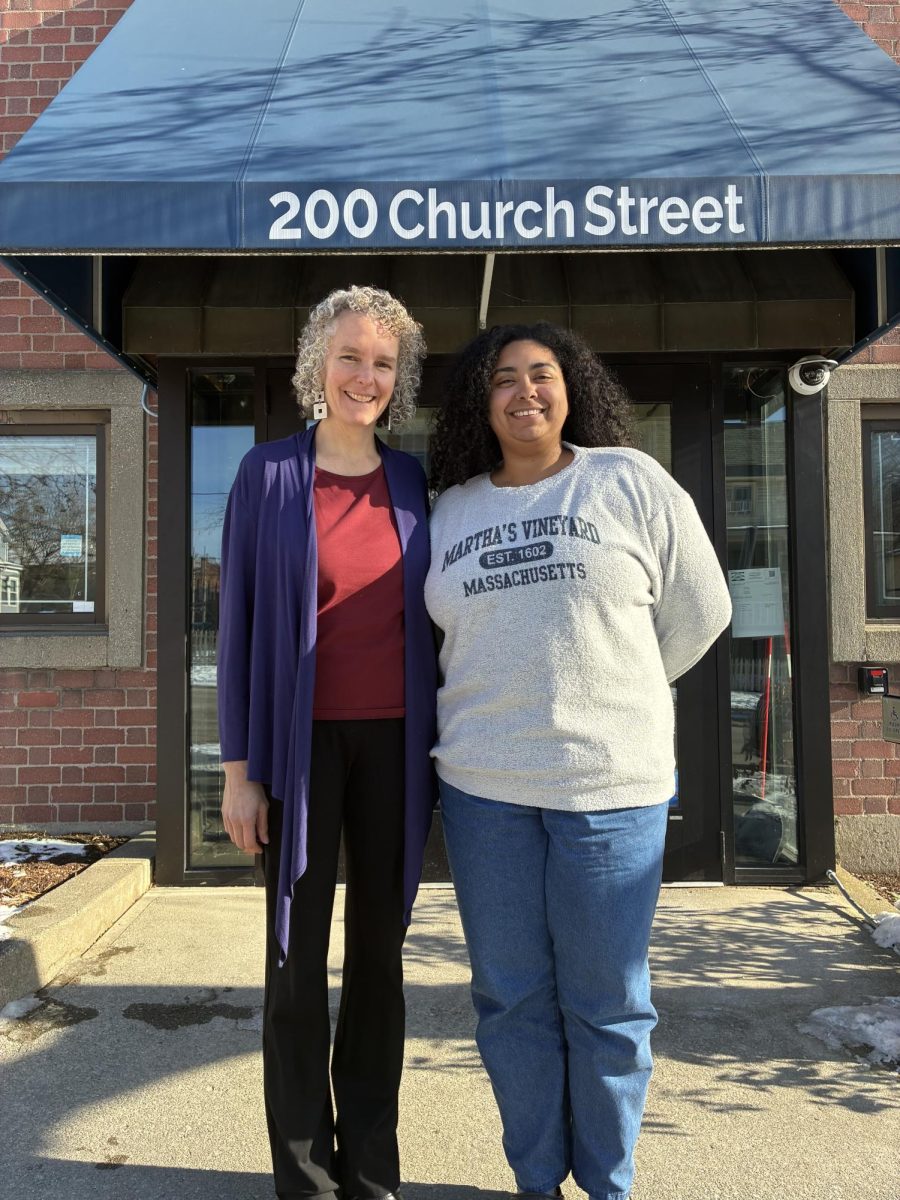
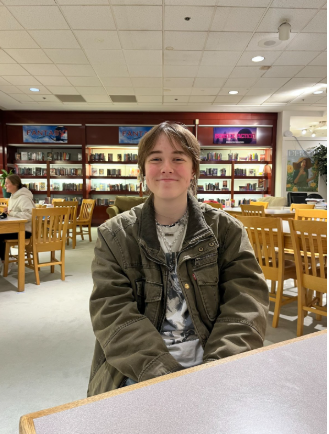
Avery Eringis ‘26 was discussing cell phone towers with a peer during physics class when, according to Eringis, that student started yelling and “lashing out.”
A few hours later, Eringis had a meeting with Vice Principal Heather Win. Here, Win offered Eringis the option to sit down with the other person or to write him a letter. Neither of these options appealed to Eringis.
“I wouldn’t have wanted to talk out what had happened,” Eringis said. “I fully understood everything that was going on and a conversation would have just been rehashing stuff.”
The options proposed to Eringis are part of a growing trend in the district to transition from suspension-based punishment to restorative practices.
Restorative Practices at BHS
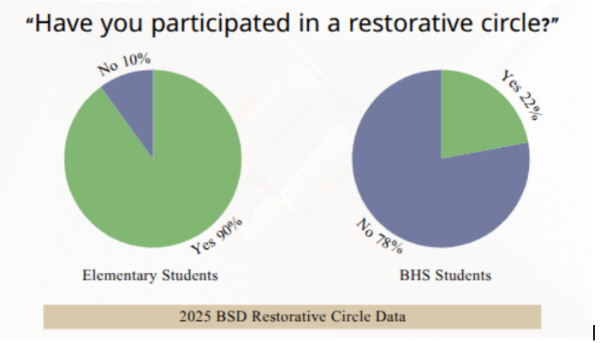
This past year, the number of out-of-school suspensions decreased by 17% to 207 suspensions, the lowest number in the past five years (excluding the COVID-19 school year).
Mika Moore, the Restorative Practices Coordinator, says she’d like to believe that this drop in suspensions is in part due to the work the restorative justice team is doing in BSD.
Restorative practices aim to address a conflict by bringing the “harmed” and the “harmer” into a dialogue. The goal of these conversations is to repair harm while understanding the motivations of the responsible party.
According to Moore, restorative justice begins with building healthy relationships amongst staff, students, administration and family. She says by connecting with people on a human-to-human level, those relationships are stronger and more resilient in the case of conflict.
“You can’t rebuild a relationship that was never there,” Moore said.
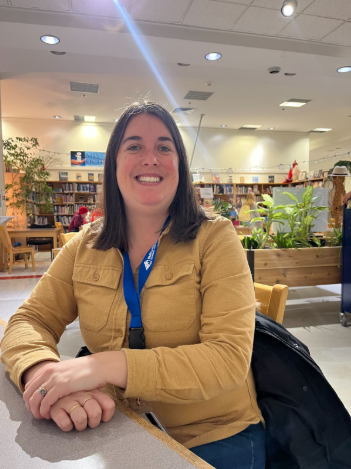
According to Moore, although it may sound “softer”, restorative justice is no less punitive than suspensions. In fact, Moore says it’s easier to be suspended than to participate in a restorative process.
“When you get a suspension, you go home, and who knows what happens? You’re not required to do any additional learning or reflection on what took place, whereas with a restorative process, you are asking the person who caused the harm to sit with the people who they harmed and hear what was the impact of their actions and to figure out how to make things right,” Moore said. “To show up in those conversations authentically is really challenging.”
Moore believes that restorative justice practices require accountability unique to other forms of punishment.
“Ideally it prevents those situations from happening again because the person learns the impacts of their actions and doesn’t want that to happen again,” Moore said.
However, after Eringis’ experience with restorative practices at BHS, he said the process can sometimes feel “condescending” and “infantilizing.”
“Sitting down and having a conversation can be helpful for elementary schoolers who aren’t emotionally mature enough to understand the two sides of an argument,” Eringis said.
Eringis says that in some situations, and especially at a high school level, a conversation isn’t enough to resolve the issue.
“It was very jarring and like kind of a scary thing to experience, and I’m not entirely sure what actually happened on his end of things. I don’t know if he actually received any penalty, other than, like the seating chart in that class being rearranged,” Eringis said.
Eringis never received any apology, either.
Moore recognizes that there are gaps in the restorative process.
“I think that’s probably where we have more work to do is making sure that the person who was harmed really feels like the process met their needs,” Moore said. “I have heard from some students before who say like ‘they’re just going to do it again, they just said what everyone wanted to hear, but I don’t think they actually meant it’.”
Moore said the restorative practices team is working on addressing this problem by following up with the person involved in the conflict and ensuring that the behavior has stopped.
The Burlington Community Justice Center
Restorative justice practices stem far beyond the walls of the high school. The Burlington Community Justice Center (BCJC), located downtown, works with justice involved youth. Their mission is to use “restorative practices and community values to foster healing, accountability, and repair for people impacted by, and responsible for, harm, conflict and crime in our community.”
Oftentimes, the BCJC gets referrals from the Burlington School District or from law enforcement. Through a process referred to as “court diversion”, a minor can avoid a criminal sentence by engaging in community service or restorative practices with the BCJC.
In 2024, the BCJC received 60 juvenile court cases and successfully closed 49 of those cases via restorative justice practices. At the BCJC, restorative justice looks like weekly conversations with youth, analyzing their decisions and how they can move forward. The BCJC strives for youth to take accountability for their actions, which is harder for some than for others.
Youth Services Restorative Coordinator Felicity Rodriguez strives to create a meaningful experience for every person, rather than simply “checking boxes.”
“We really believe that accountability is an ongoing skill and something that we need to practice,” Rodriguez said. “We really try our best to work with kiddos and understand that it may take time to really realize the impact [of their actions] and to get to a place to say, ‘Yeah, I did this, and it was really messed up, and I’m willing to show up’,” Rodriguez said.
One of the main goals of the BCJC is for youth to build relationships and connections within their community. Rodriguez finds it easier for kids to take responsibility for their actions when talking with someone they have built a connection with.
BCJC Executive Director Rachel Jolly emphasizes the importance of having a community that is both supportive and holds individuals accountable.
“If we ensured that every youth starting from birth had strong connections that kept their well being at the center, I think our criminal justice system would have less youth in it,” Jolly said.
Community based repairs
Prioritizing community is a theme within the BHS student support services, as well. Through a student concern log, teachers can identify students who they think need extra help. Based on the need, Dean of Students Molly Doran works with the necessary people to help this student. Doran emphasizes the importance of collaboration when helping a student who may be falling through the cracks.
“Sometimes [meetings] involve [the student’s] doctor’s office or their therapist or social worker or whatever support they have outside of school. And if they don’t have that, then [it’s about] helping to develop that,” Doran said.
Every week, a pediatrician comes into the school to meet with students and minimize barriers to medical access. According to Doran, these doctors often know the students’ family history and are able to work with students on their mental and physical health.
Student support specialist Carrie Tewksbury said that the student support team first tries to reach the student through conversations with on-site mental health counselors. If that doesn’t work, the school reaches out to the family for a home visit. After that, the school works with community resources, like the Howard Center.
“We try to catch [students who are struggling] as soon as we can with everything we can,” Tewksbury said. “It’s this combination of all of us trying to figure it out together.”