

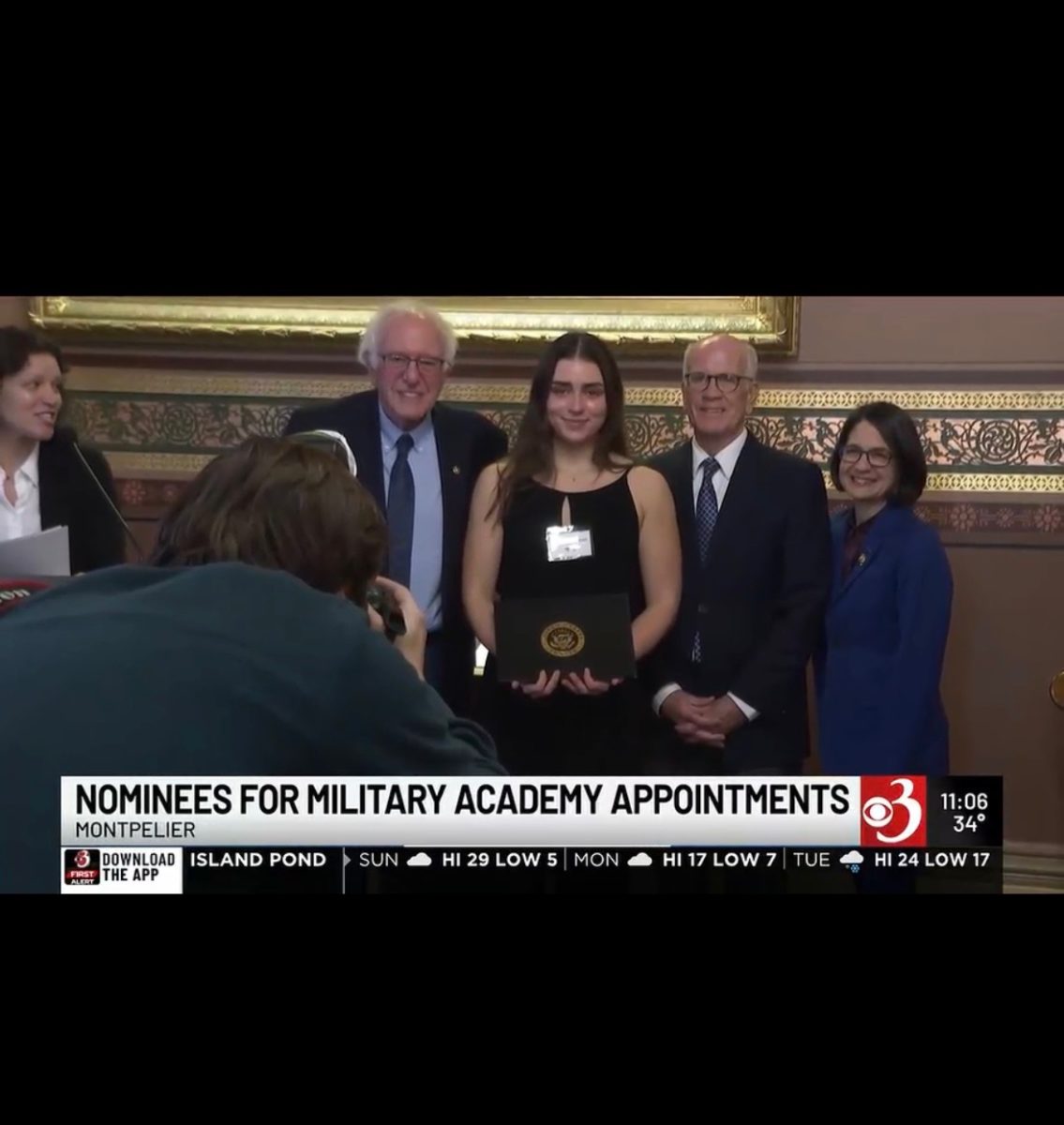
Neave Glennon ‘26 is going into the military.
The summer before her junior year, Glennon was swimming with her friends at the beach and talking about what to do after high school – they were both worried about the “financial stuff”. Her friend mentioned a cousin of hers who was in the army and talked about the Naval and Military Academy. Glennan had heard of these places, but didn’t fully understand what they had to offer.
A month later, a Naval Academy officer was at BHS and Glennon decided to talk with her.
“It was a woman, which was really cool,” Glennon said. “She got to work with the Coast Guard and do a bunch of drug busts, but then also do a bunch of cool stuff like in the Capitol at the White House. And I just thought it would be a really good option for me to pursue because one, it would keep me financially secure, but it also [would] give me a job I would like to do and give me some sort of purpose.”
Neave said she feels like there is a “stigma” around the military at BHS, especially with “what’s going on [with] this Presidency,” but said, “a lot of things can be true at once.”
“The military needs good people, so I kind of felt like I had a job to do,” Glennon said. “I needed to do something with that vocation, with that calling.”
Glennon has received several different reactions to her plans for the future.
“It’s a ‘congratulations’, it’s a handshake,” Glennon said. “But from younger generations, it has been a lot of, ‘Are you sure that’s really what you want to do?’ And you know that has been kind of hard to deal with.”
Glennon said she’s had supportive teachers, but also teachers who “have refused to hear me talk about it because they’ve seen it as ‘military propaganda’.”
“I’ve had a lot of weird experiences with that,” Glennon said. “where people feel that it is propaganda that I’m giving in to.”
Ian Kingsbury ‘26 is joining the Marine Corps when he graduates. Kingsbury’s dad was in the Navy; he has uncles and cousins in the army and his great-grandfather was a paratrooper in WWII.
Kingsbury said some of the greatest people in this country have been in the military, and he wanted to join to be a part of that team and to protect his country, “and what it stands for: the Constitution.”
Kingsbury said he couldn’t pinpoint the exact moment he decided to join the military, but that he has talked with soldiers, listened to podcasts and watched many movies about people’s stories.
“I’ve always been interested in esprit de corps and teamwork and the benefits that come with that,” Kingsbury said. “It’s being a part of something bigger.”
Financial incentives are another draw, with both Kingsbury and Glennon pointing to the opportunity for free college.
Vermont Army Reserve Recruiter Sergeant Kenny Pelno said that people may join the military to find a way to pay for school, but also to preserve family tradition, if they are uncertain about college plans, or to take advantage of benefits such as on-the-job training.
“I recently worked with someone who enlisted specifically to become a diver so they could gain hands-on experience in underwater welding,” Pelno said.
Jasmine Mieszala, a US Coast Guard Recruiter, mentioned how the Coast Guard has benefits such as healthcare and paid time off that almost no other entry-level job has. Mieszala also said she would be eligible for retirement at the age of 39.
Glennon said she is definitely taking these financial reasons into consideration.
“[Joining the military] isn’t everyone trying to be some Superman or Wonder Woman. It’s just everyday people just trying to get by and figure out how they’re gonna live in this world and be comfortable and secure.”
But more than that, joining the military for Glennon is about helping people.
“The military should put the needs of all Americans first. I feel like I do that in my everyday life with the people in my world, and my friends and family and teachers, and I really try to be a person that is putting the needs of others first,” Glennon said.