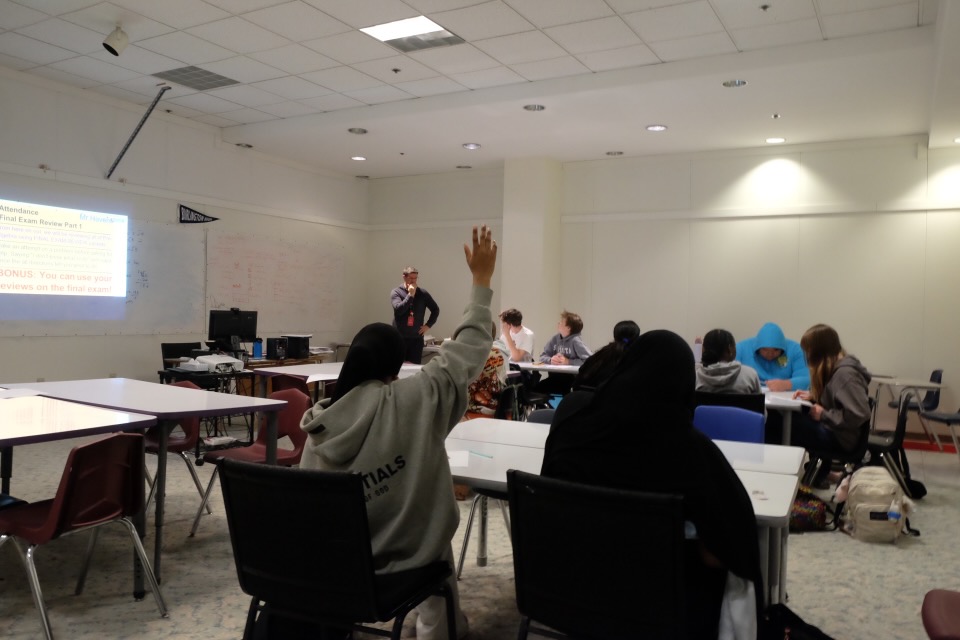


BHS moved from the old location on North Ave to the Macy’s building to escape the dangerous carcinogens (PCBs) hidden in the walls. But the Macy’s location has its own environmental concerns. Last year, the building saw mold in the carpets and the walls, and more recently, high levels of carbon dioxide (CO2).
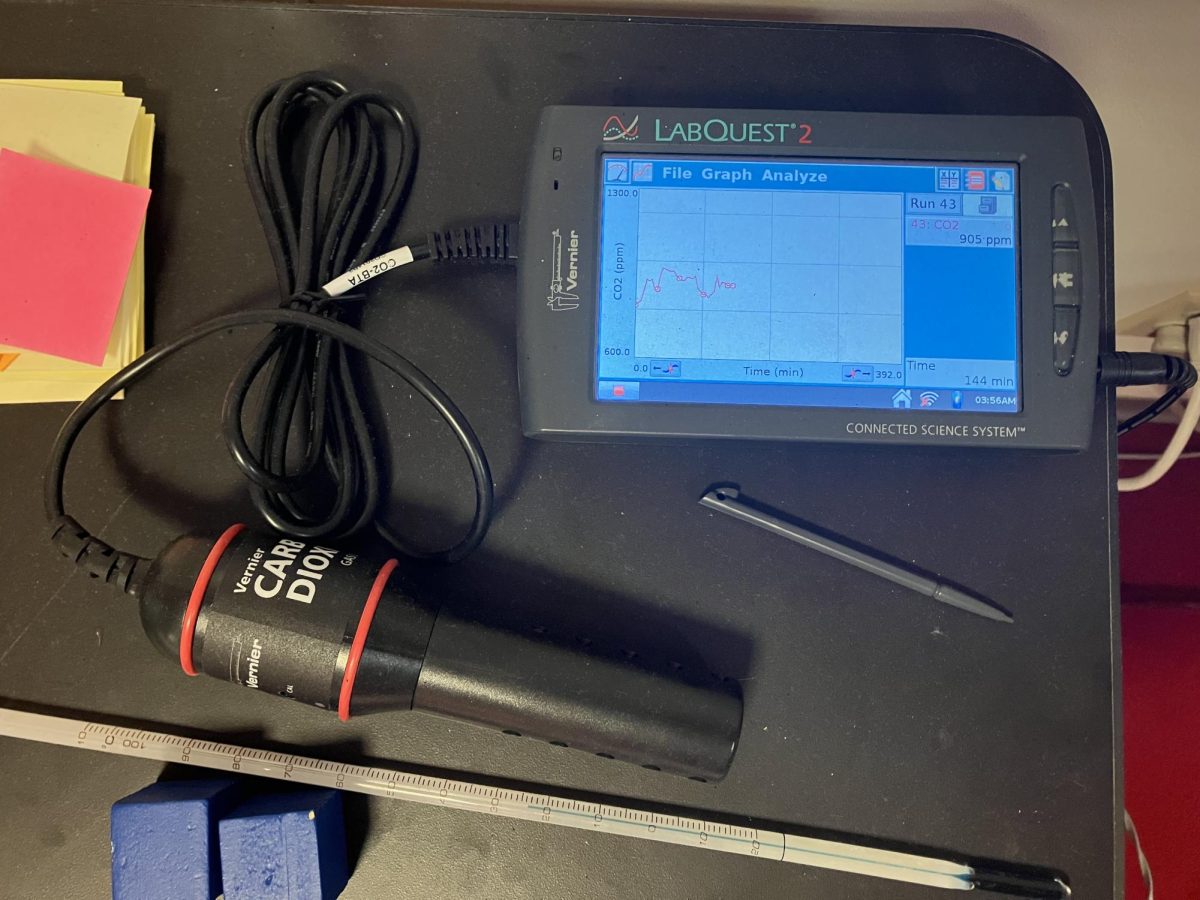
AP Environmental Science teacher Brian Hoffman started monitoring for CO2 because there were rooms with abnormally warm temperatures – a sign that fresh air was not coming in. Hoffman, and a few other science teachers, started monitoring using equipment they already had for labs and found CO2 levels that they thought were abnormally high for a school.
“Temperatures were way up, people started saying that they felt sluggish, and some people complained of headaches,” Hoffman said.
Not only can high CO2 levels cause such symptoms, but several studies from the American Lung Association showed that students achieved higher standardized test scores if they were in well-ventilated classrooms.
Hoffman said Principal Sabrina Westdijk and Director of Facilities Lyall Smith found intake vents on the roof that needed to be replaced.
“Addressing the air quality was an extensive project for which Lyall utilized district staff and outside contractors,” Westdijk said. “What resulted was exhaust fan repairs on the roof, which required the ordering of retired parts and uncommon fuses.”
Part of the airflow problem can also be traced back to when BHS was first being converted from mall to a school. The original plan had classroom walls that didn’t go all the way to the ceiling.
“It was crazy loud,” CharlesDan Sheffey said. “You could hear what everyone was teaching. We couldn’t watch movies. I could hear Mr. Lodish from anywhere in the building because he taught in the middle of the second floor.”
To fix this problem, they built extensions on the walls to make them reach the ceiling. Unfortunately, this caused an obstacle for airflow through the building. This airflow issue also contributed to the mold problem from last year.
“It was horrible,” Molly Welsh ‘27 said. “Just because it gets so hot and muggy in here, because there’s no air flow [through] windows, right? And it’s up to the building if the AC works,” Welsh said.
Both mold and high levels of CO2 can have unfortunate effects on respiratory health and mental focus, such as causing fatigue.
In addition to not having any fresh air, the building’s lack of windows raises another problem: Vitamin D deficiency, which can seriously impact mental health, the ability to learn and even hormone patterns.
These are the unintended consequences of building a school in a place that was never meant to be a school. The new school includes ongoing environmental monitoring during demolition and construction, as well as updated ventilation systems. And, of course, functioning windows.
Welsh is looking forward to the new BHS, which is scheduled to be finished by the 2026-2027 school year.
“I cannot wait to get out of here,” Welsh said.